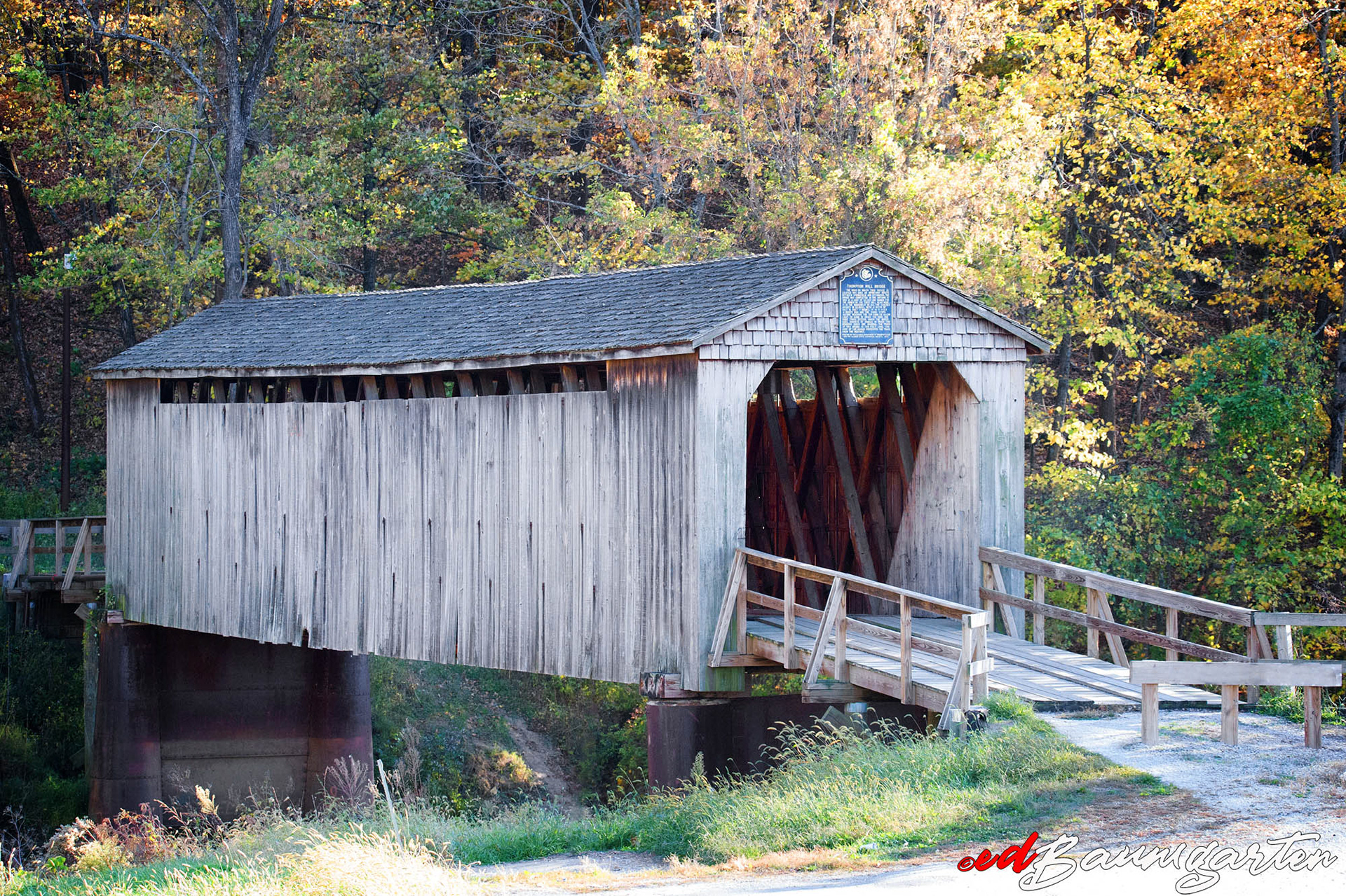
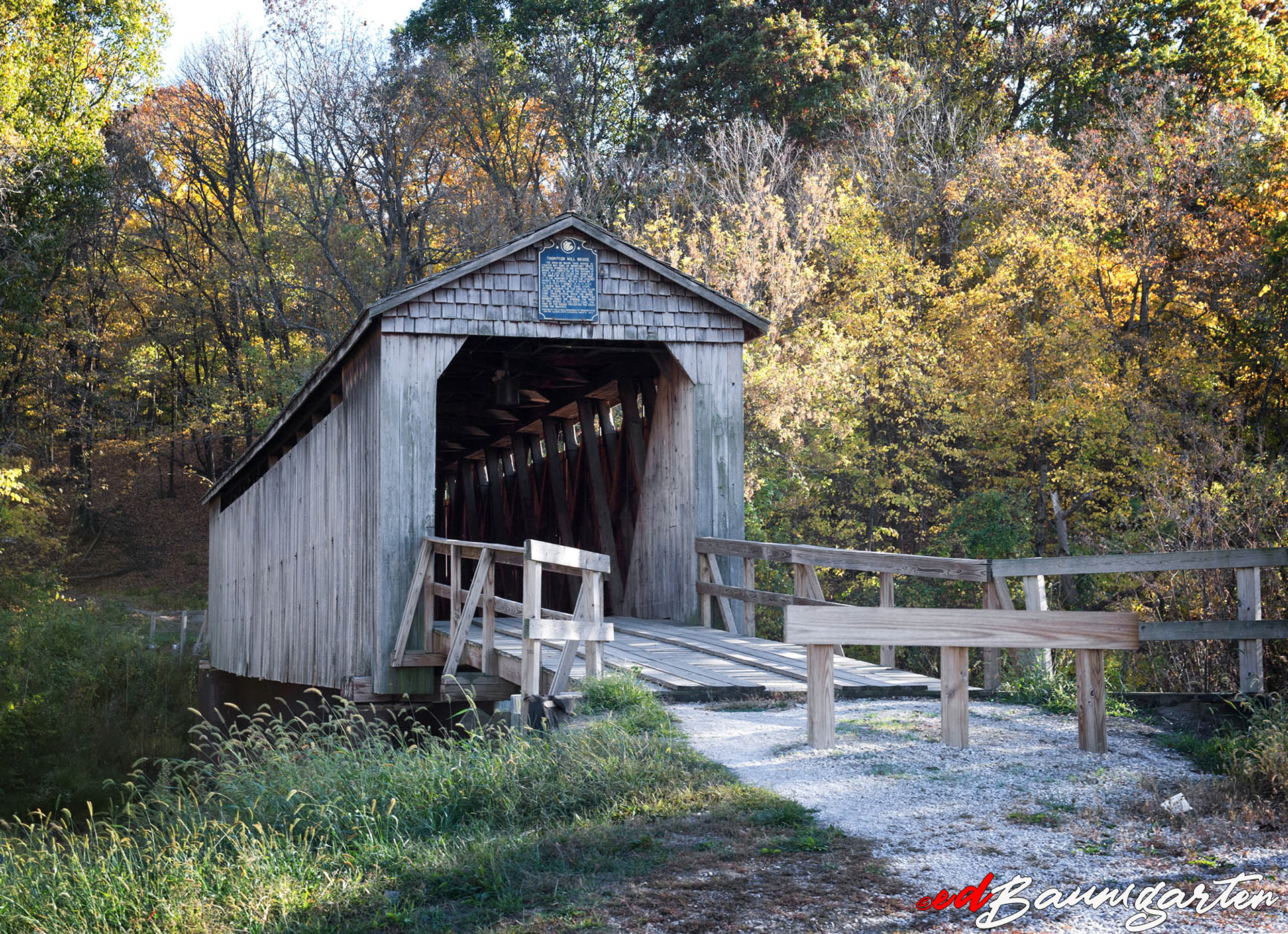
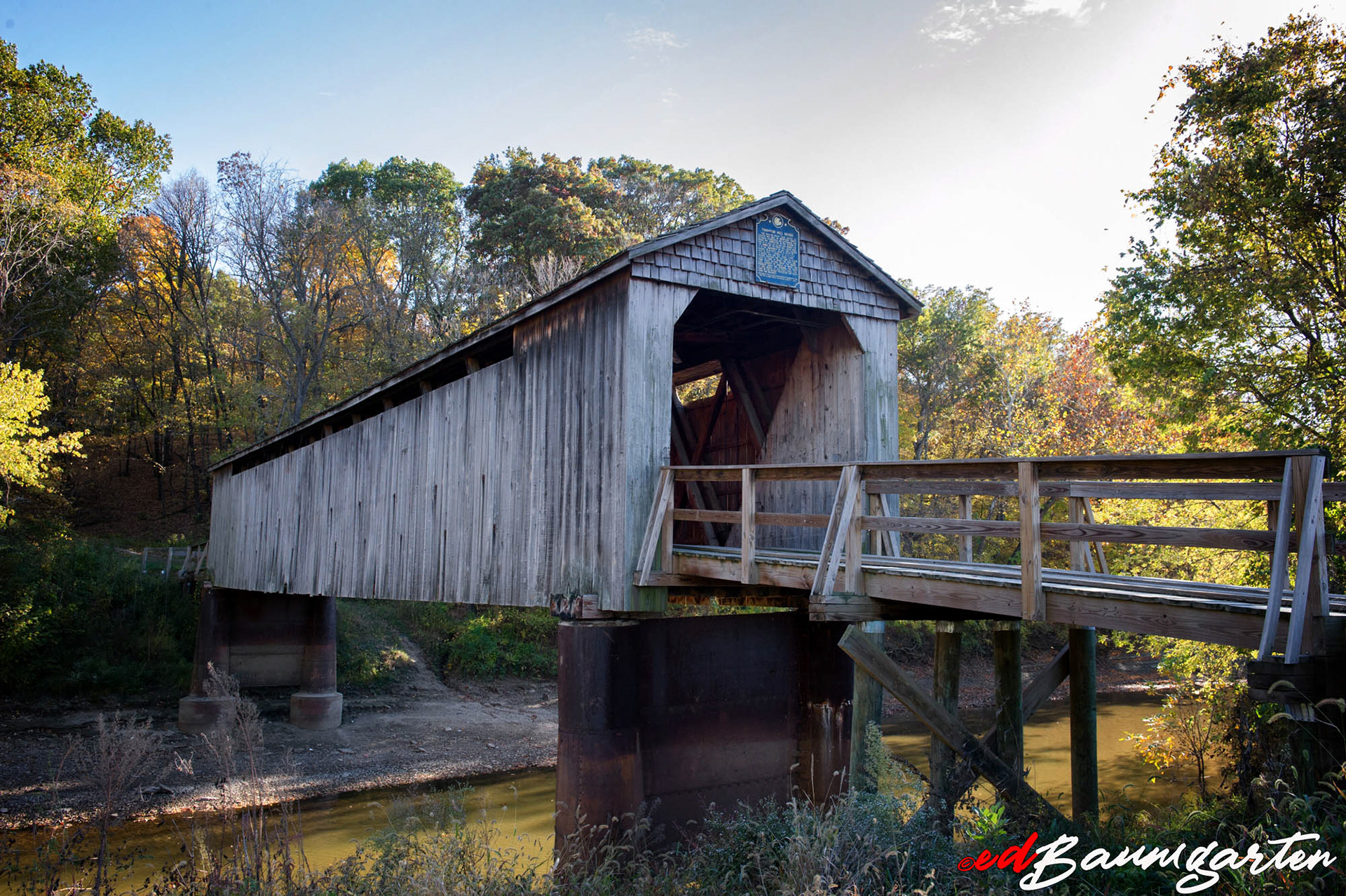
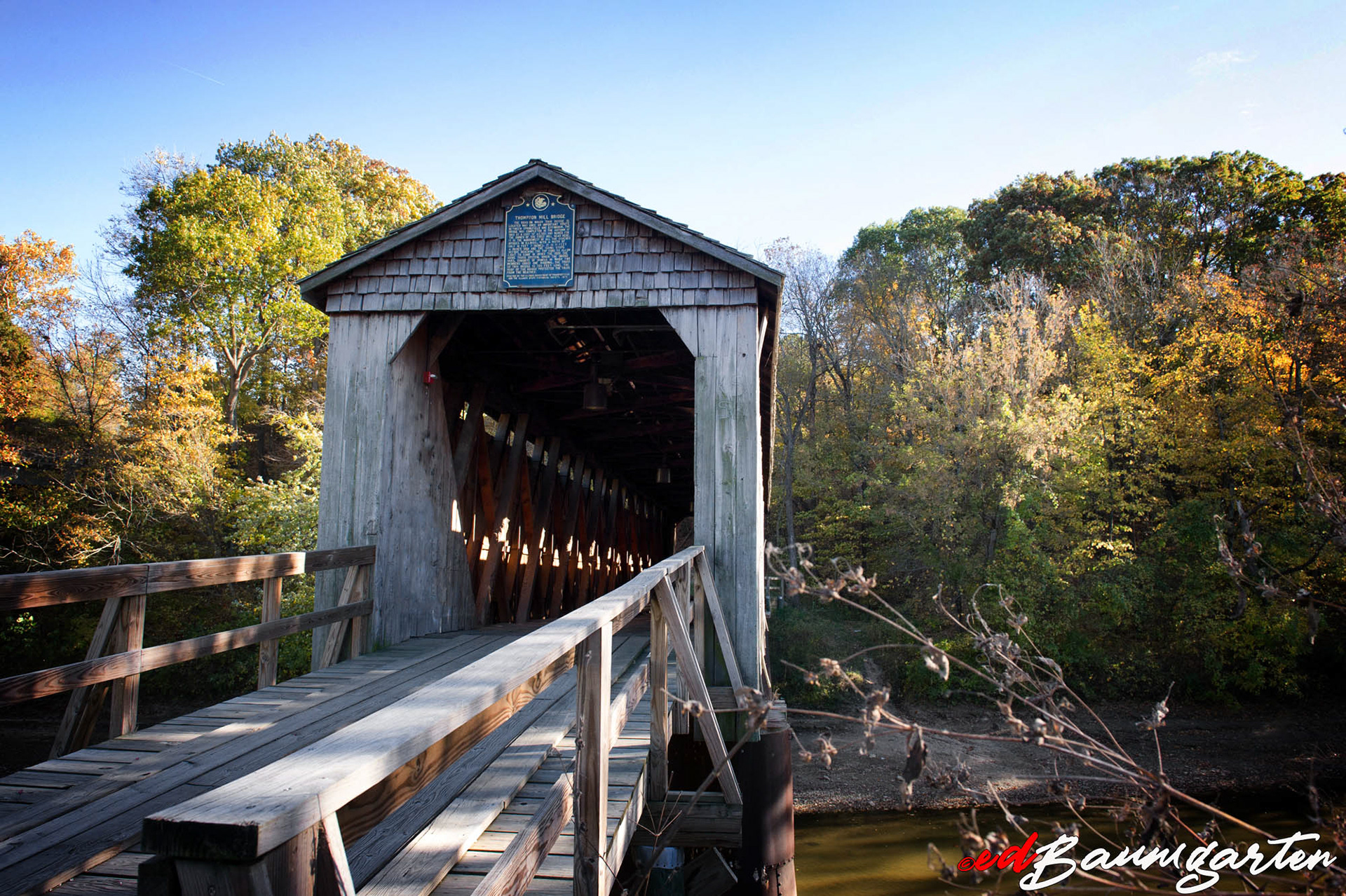
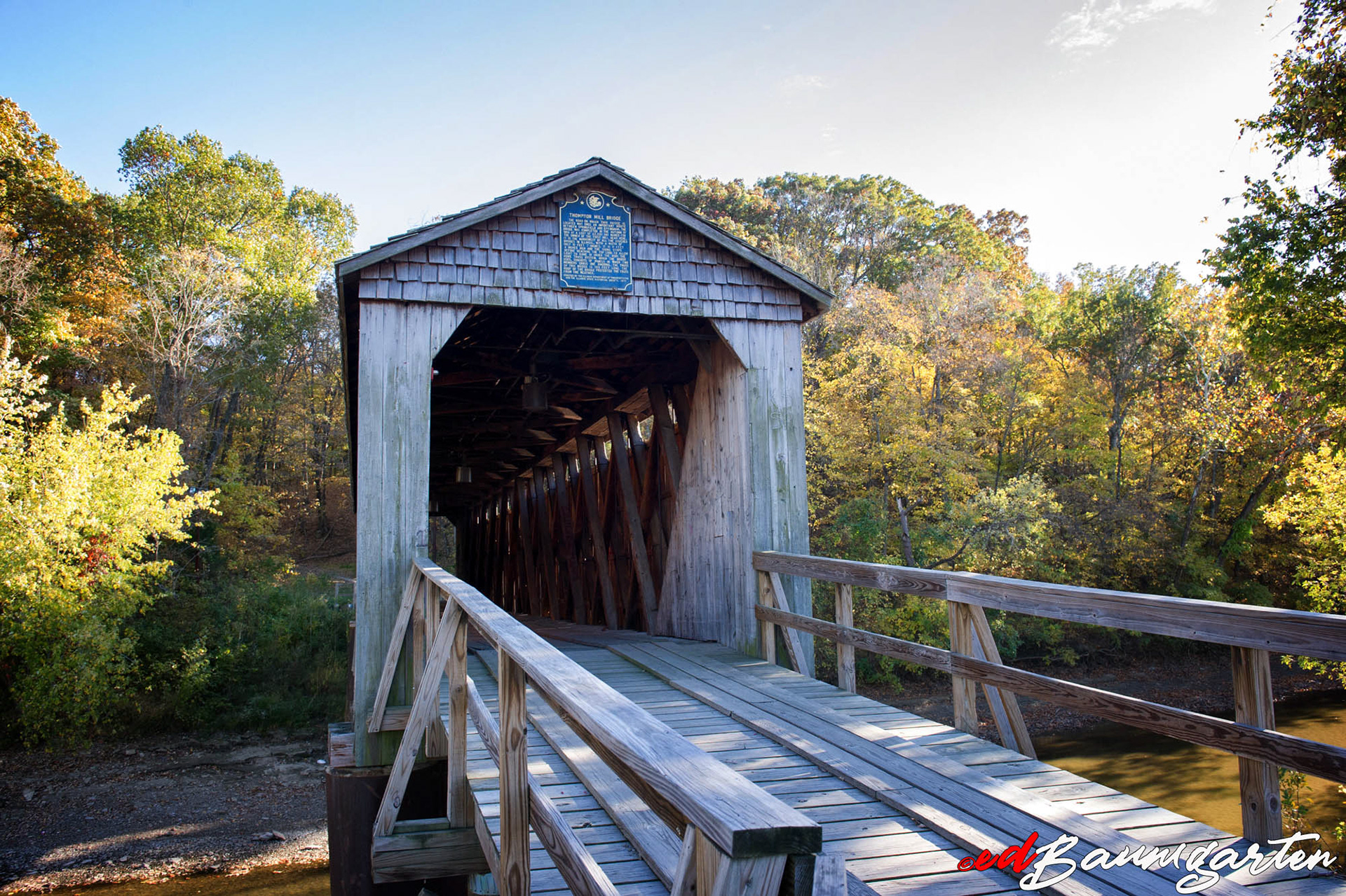
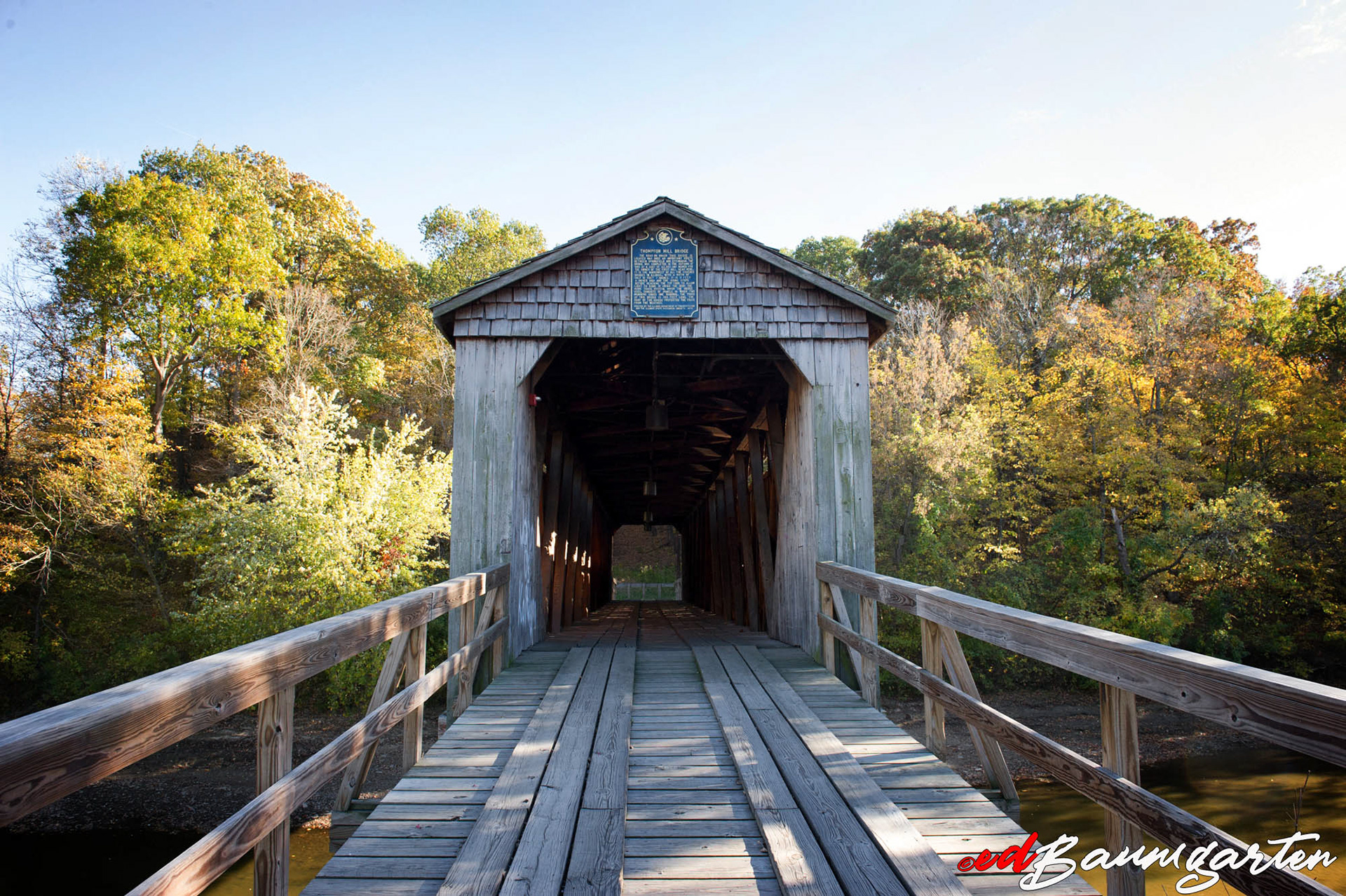
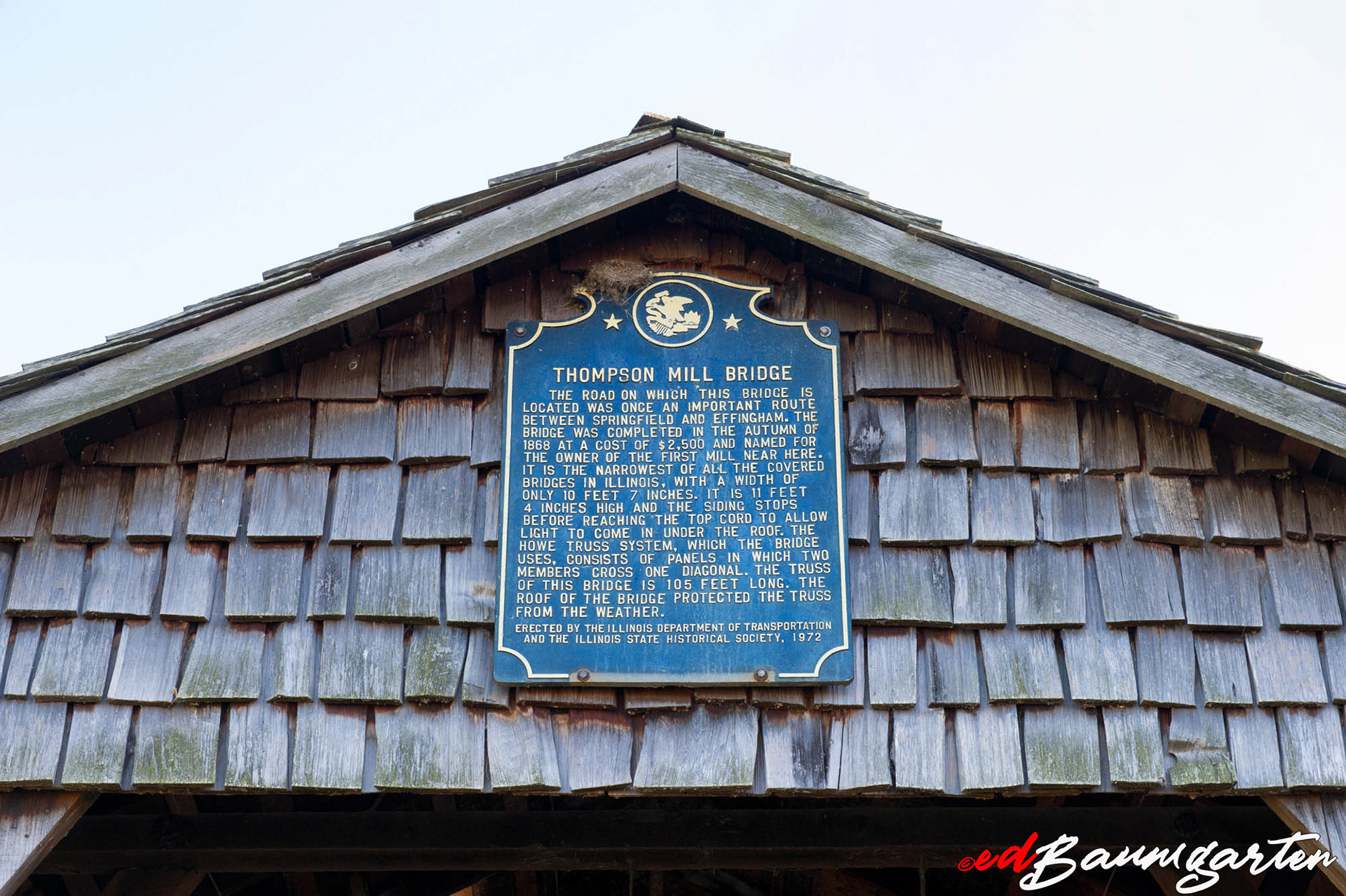
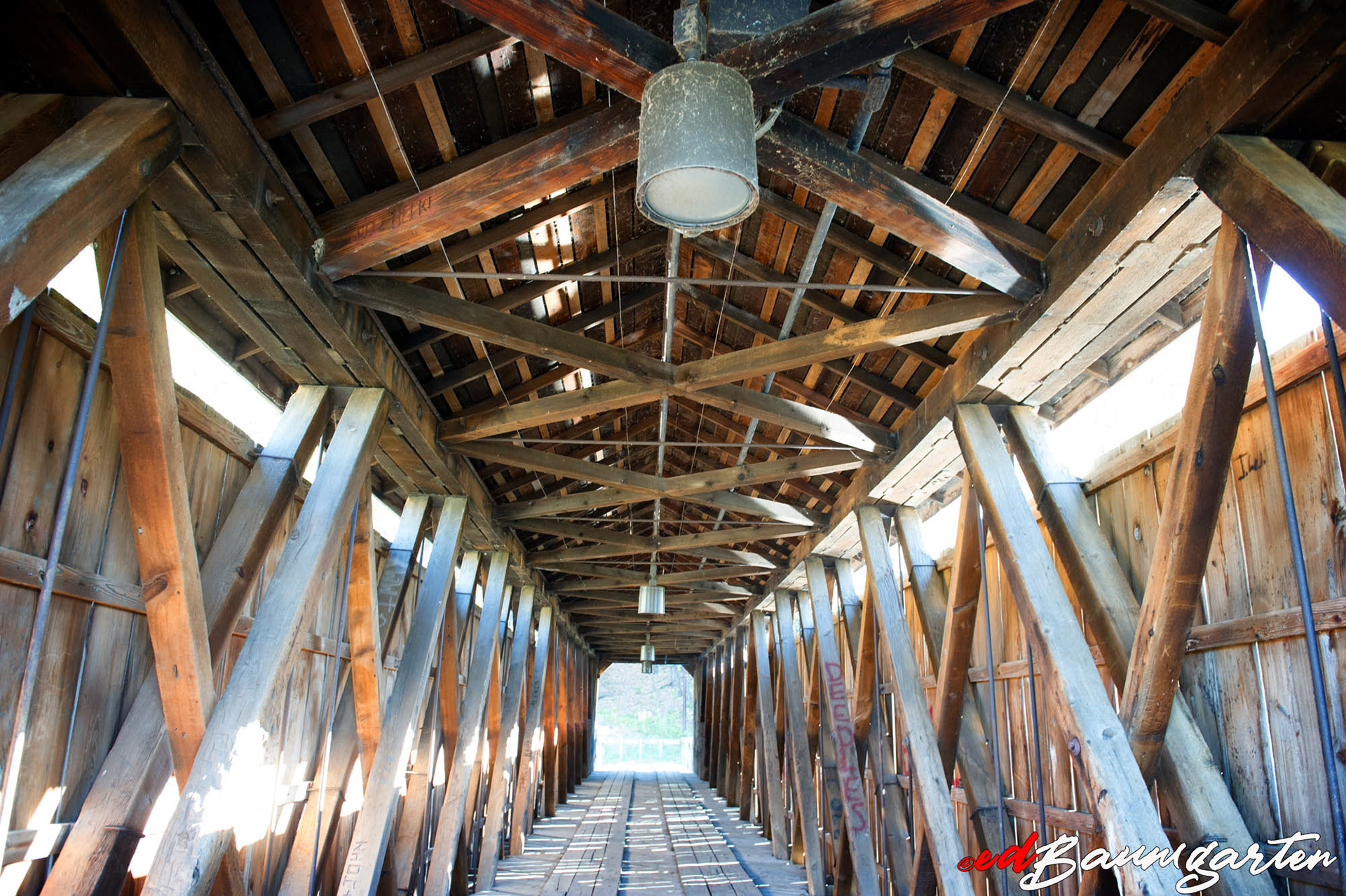
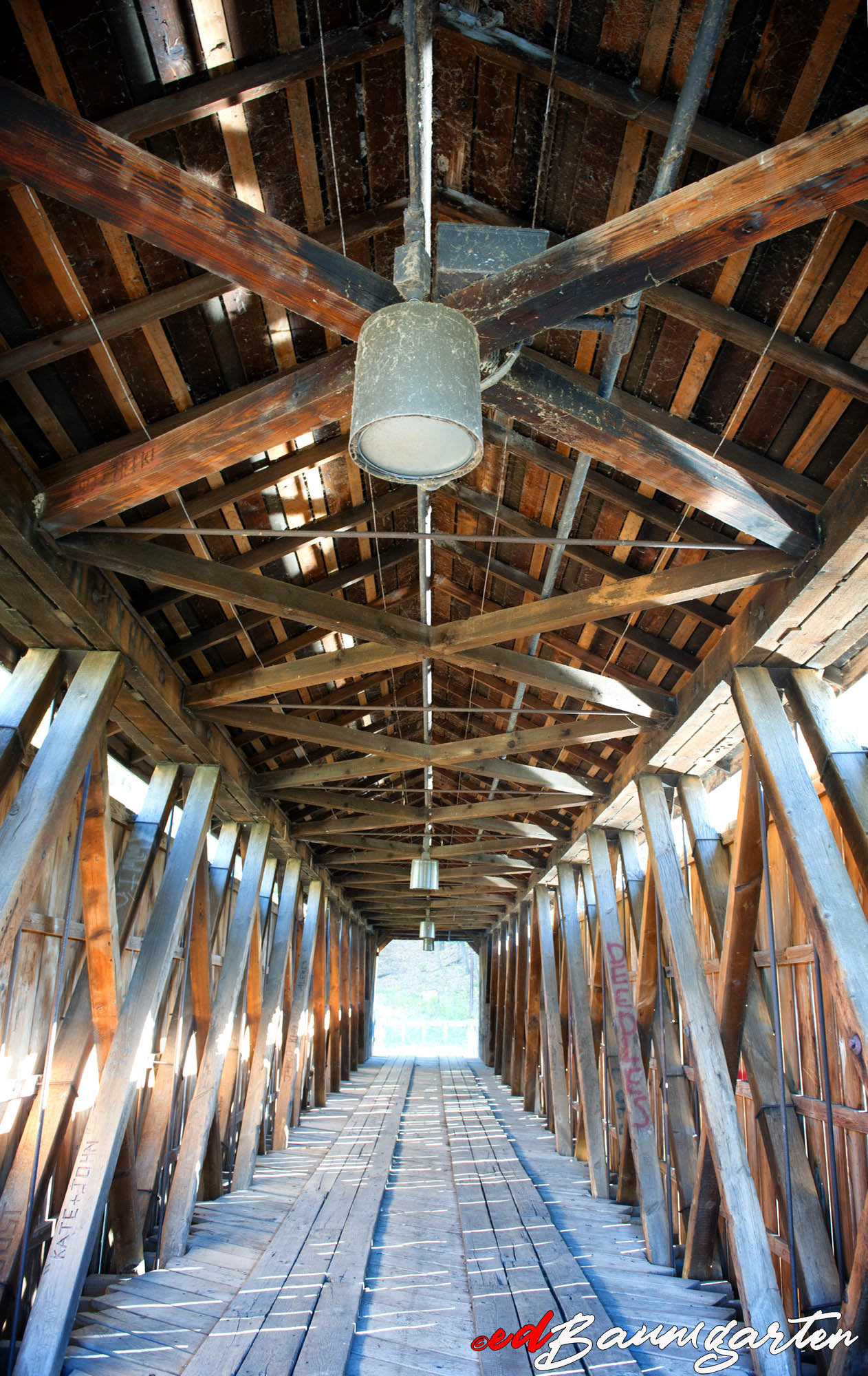
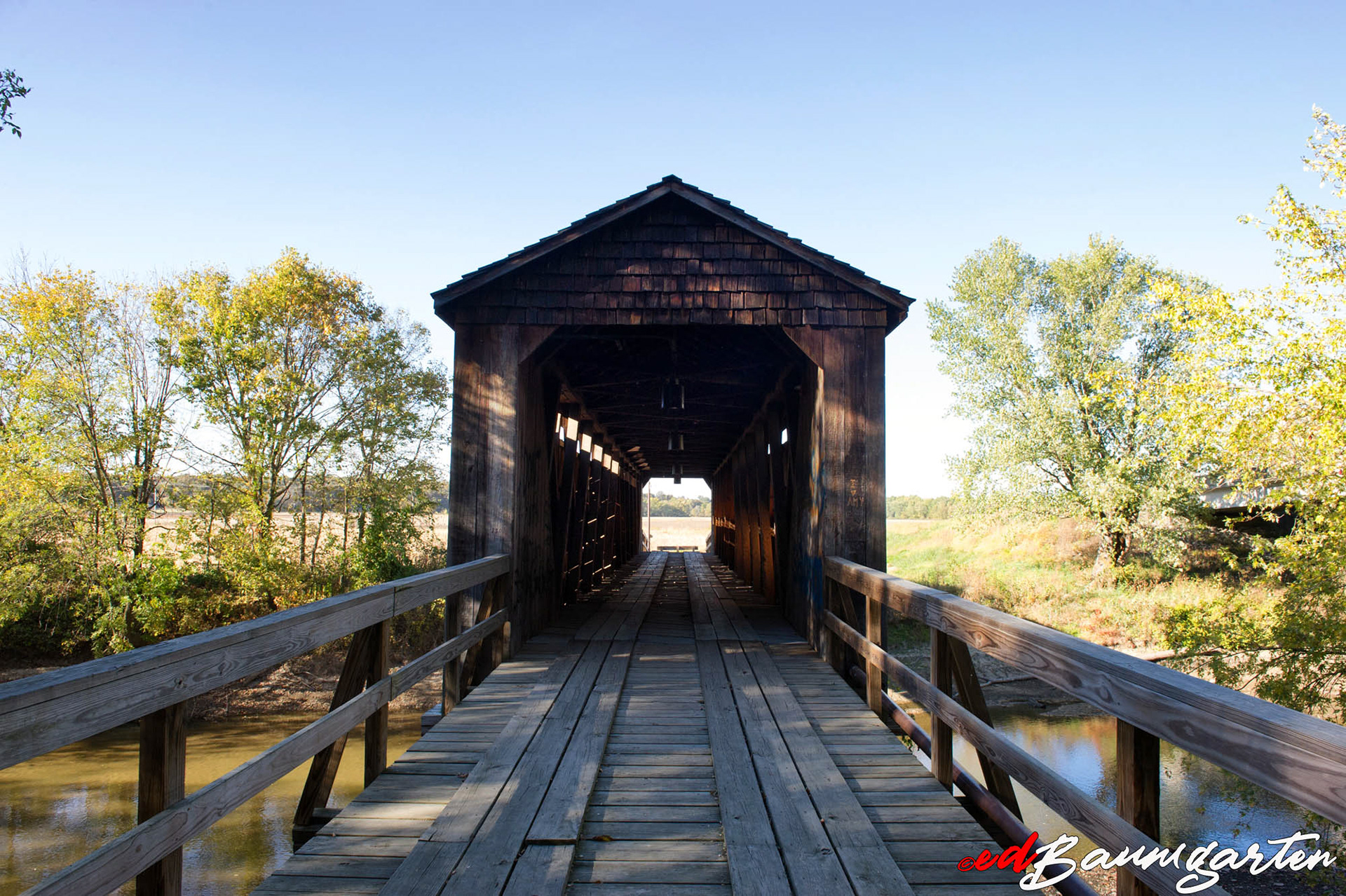
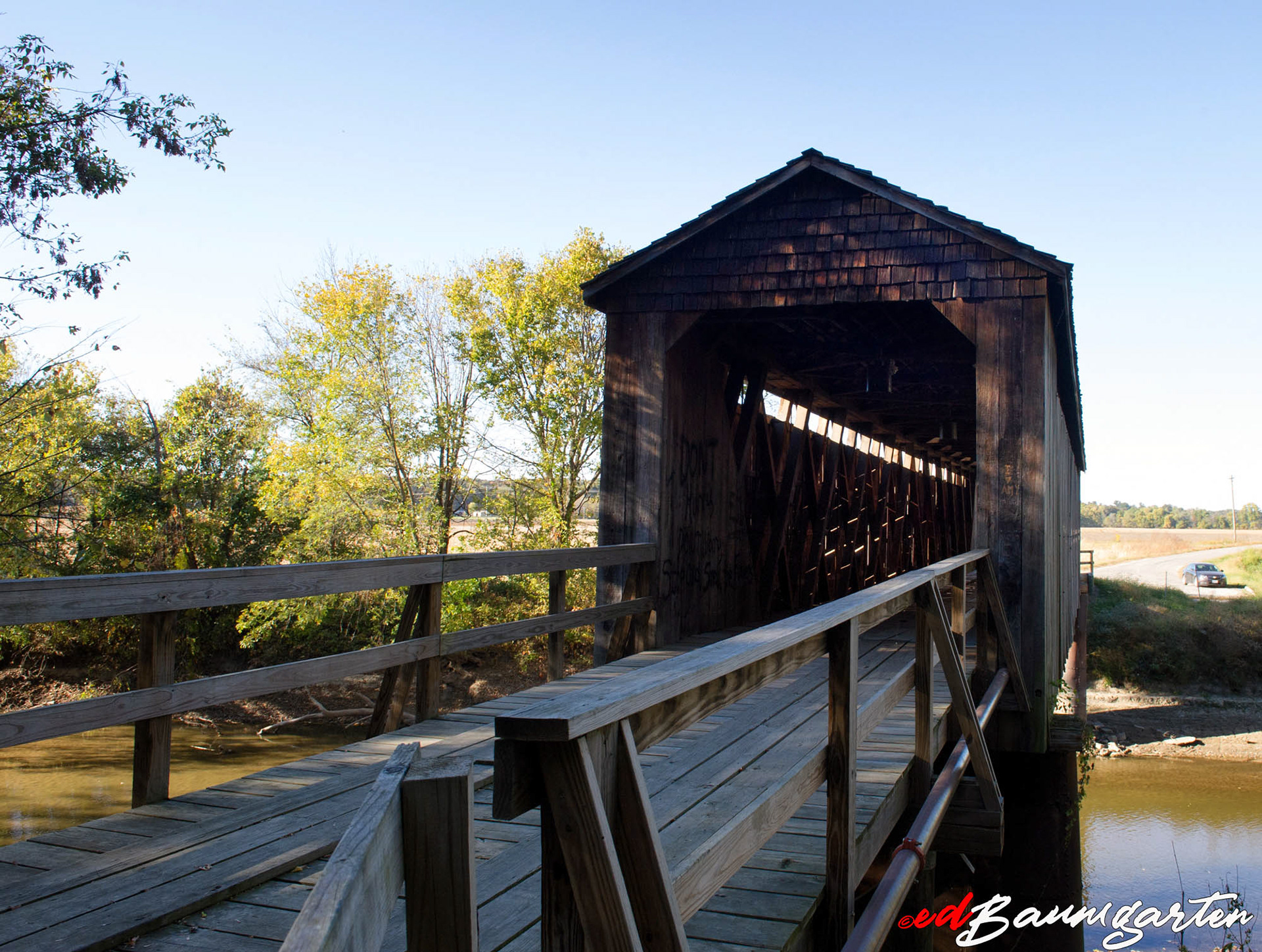

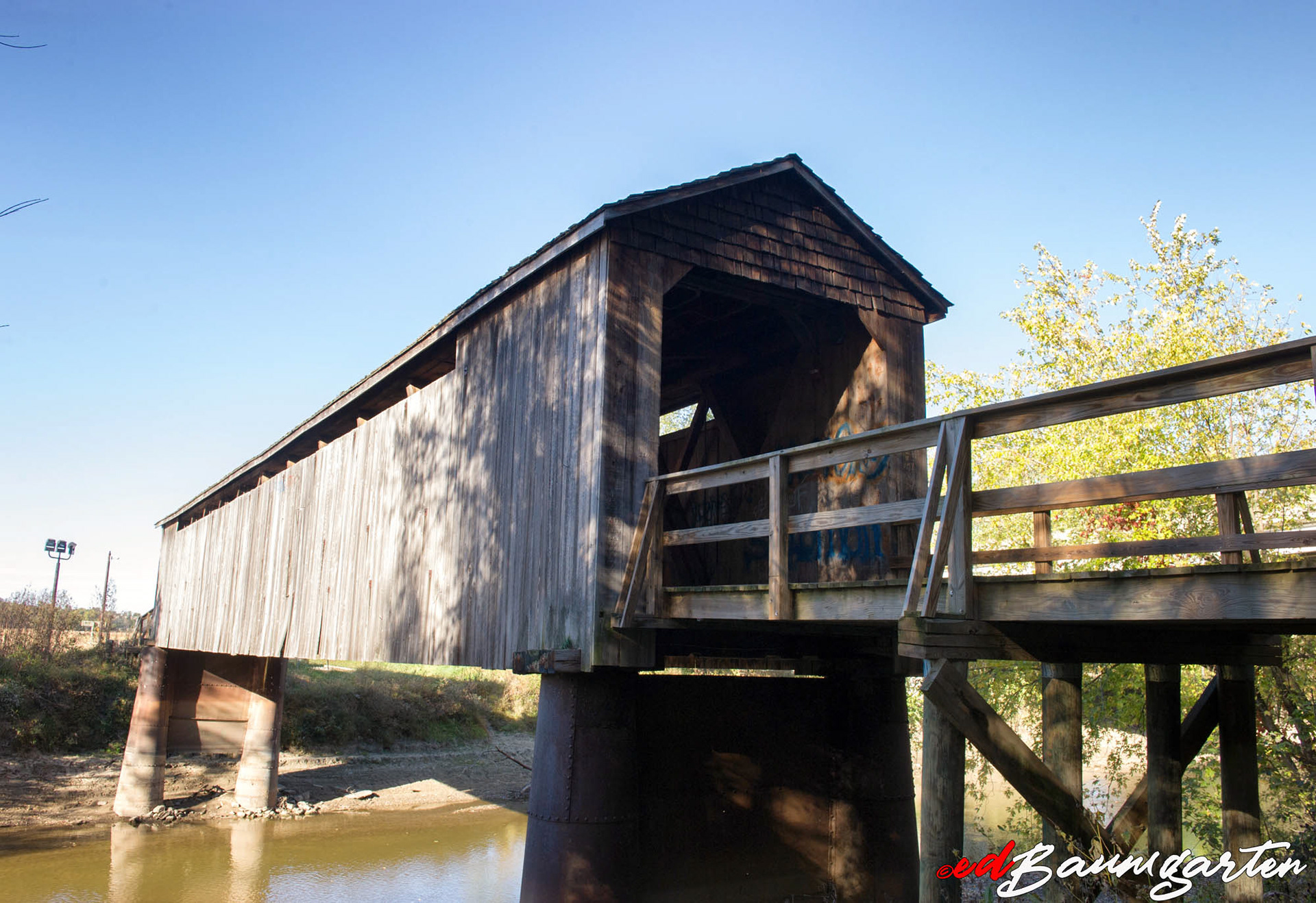
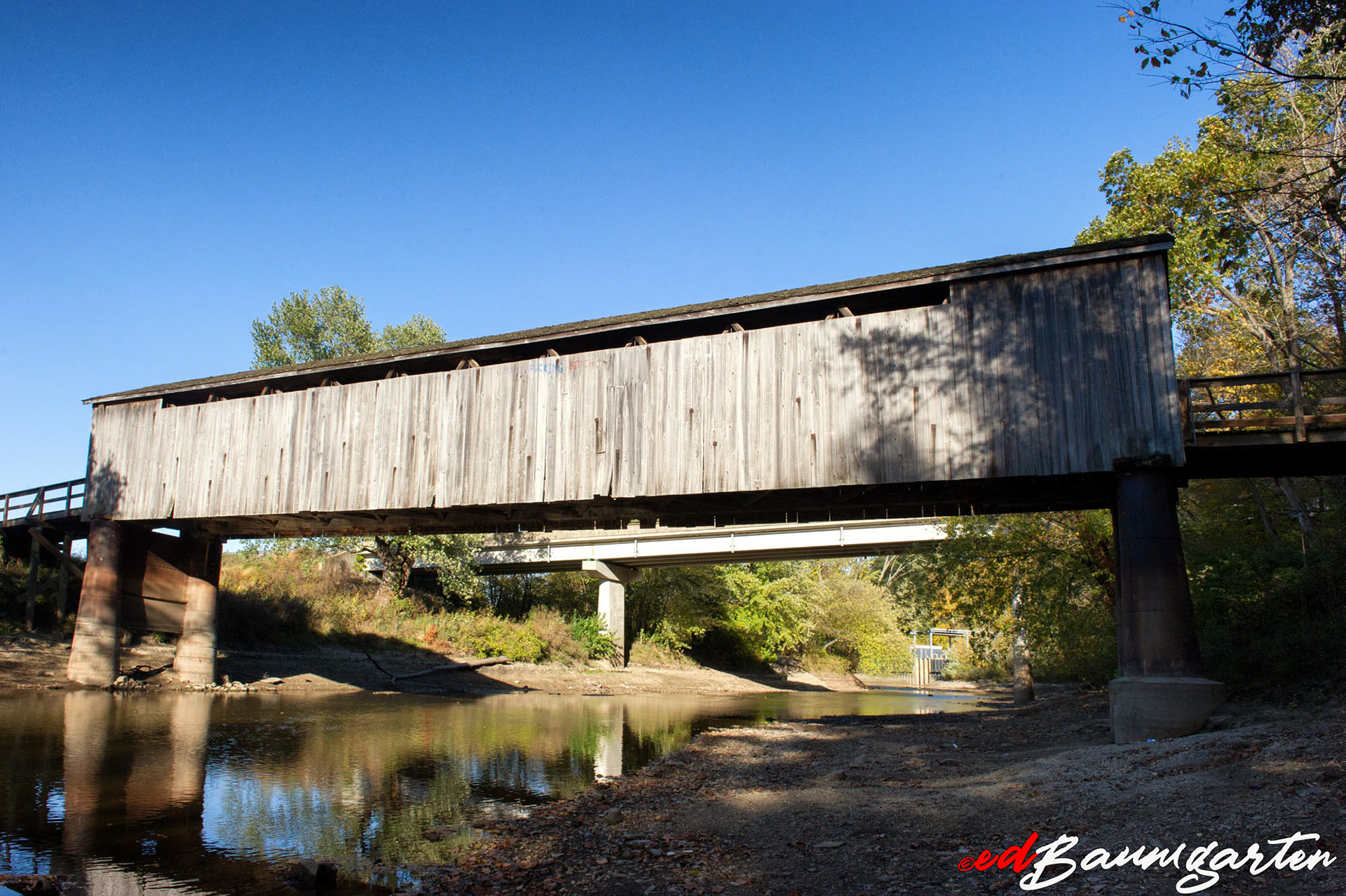
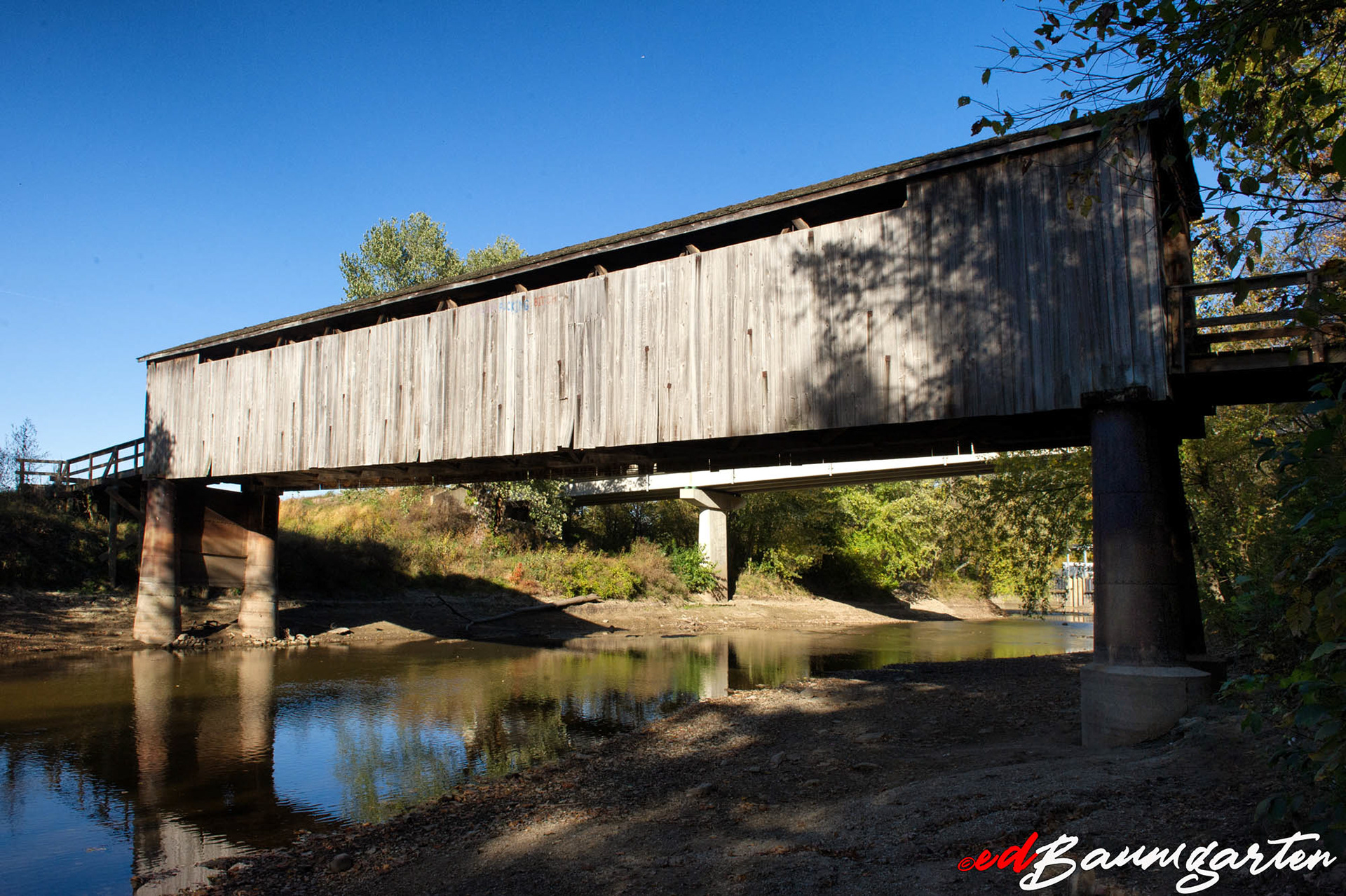
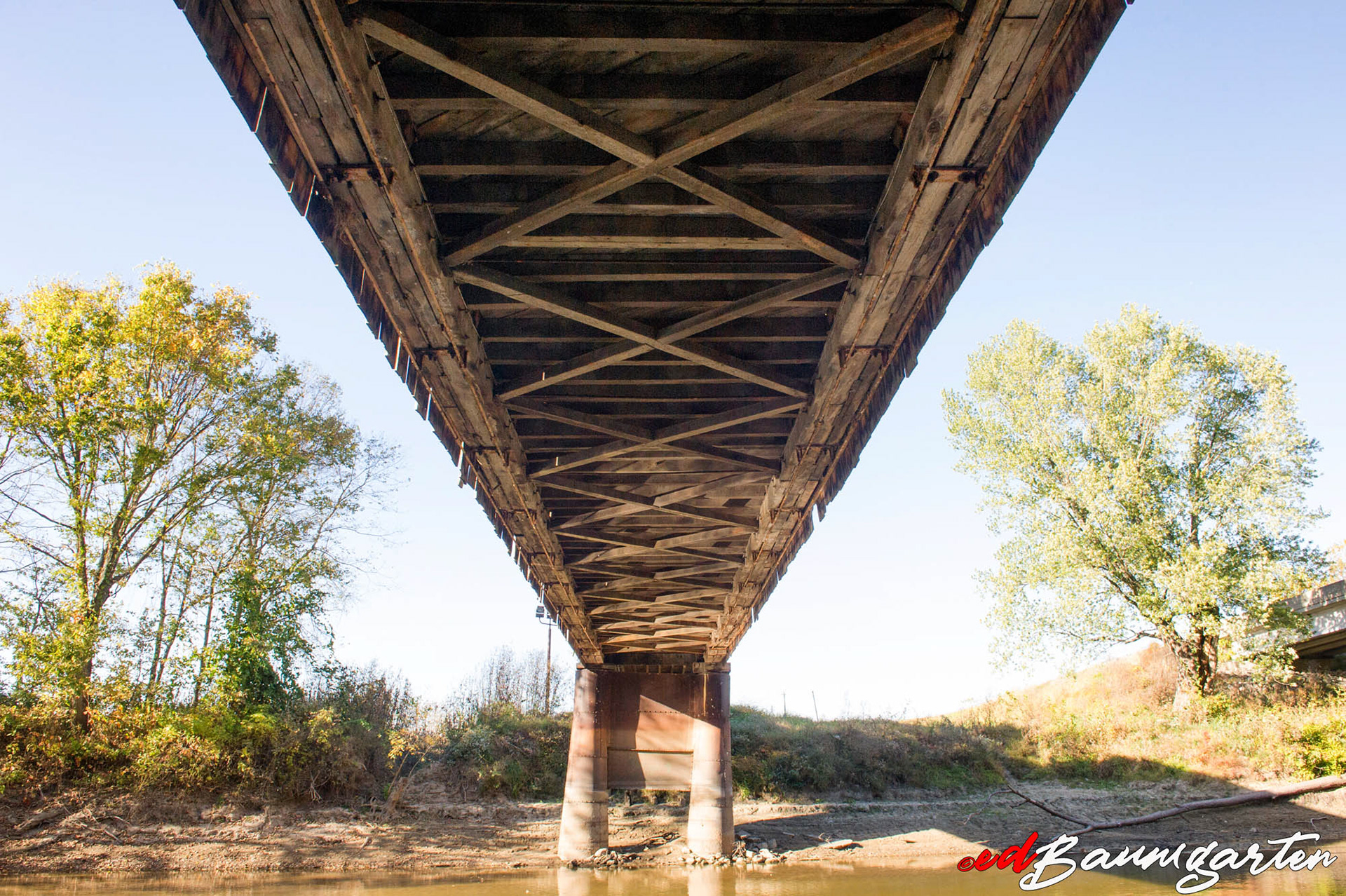
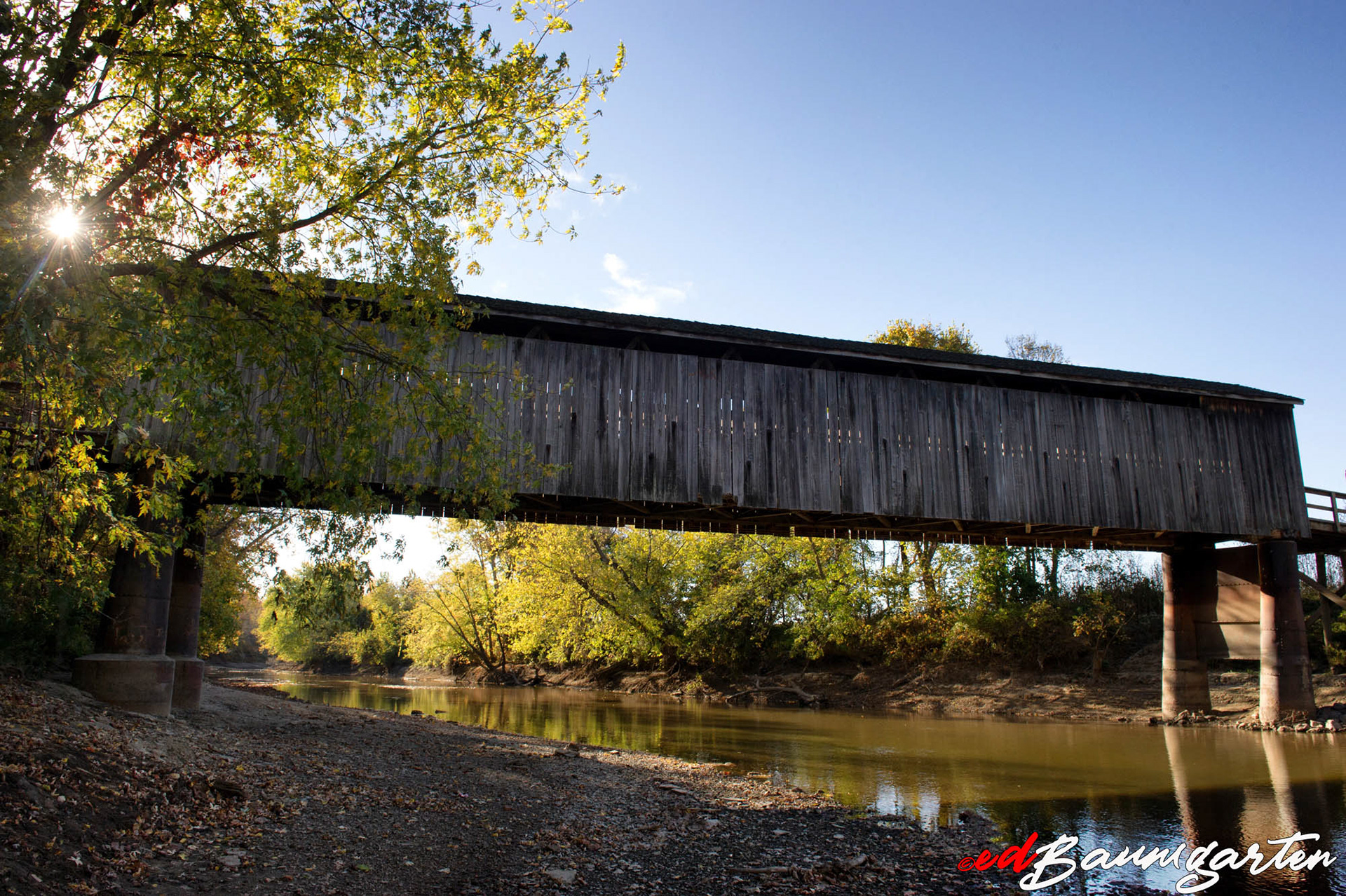
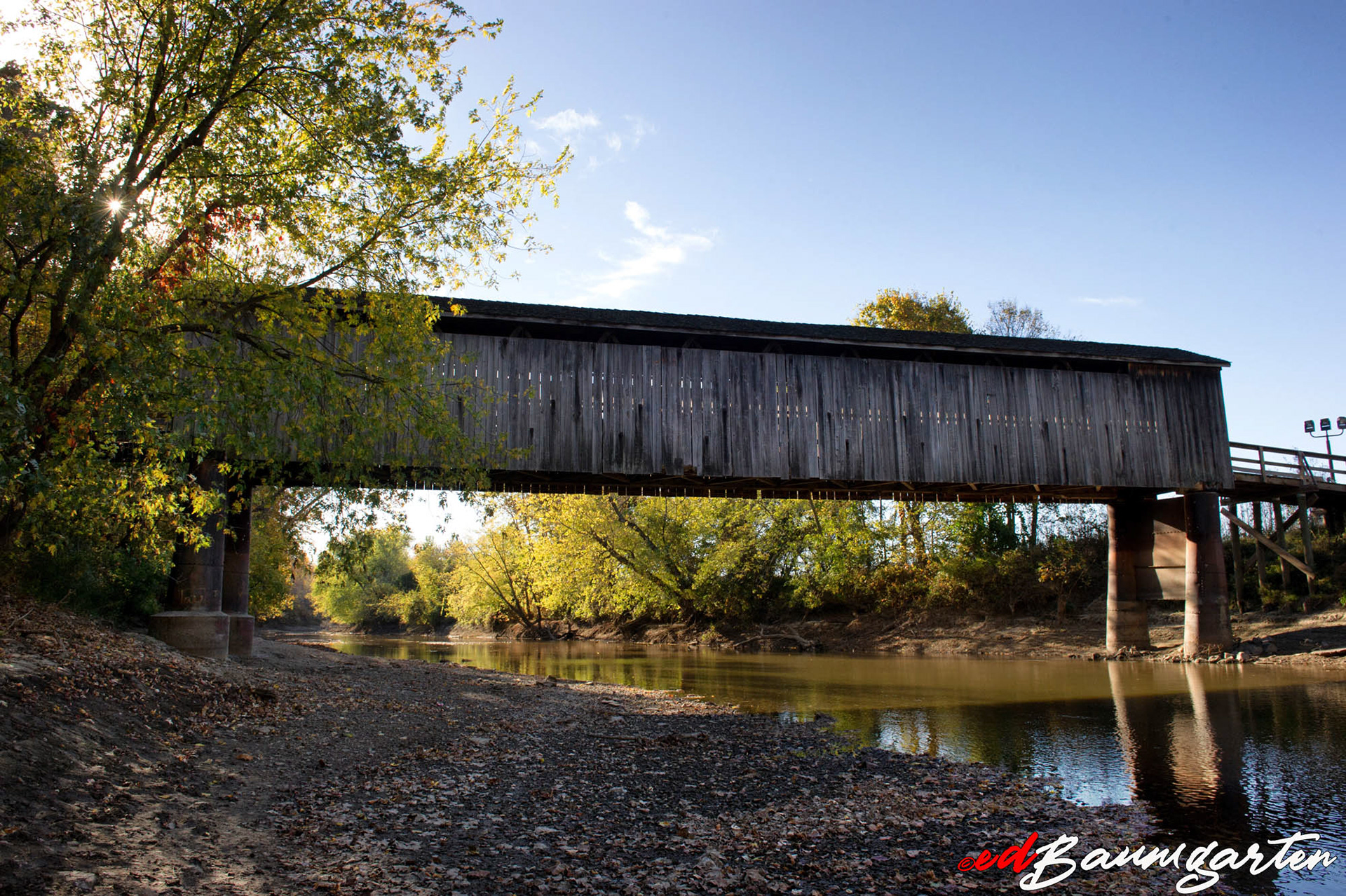
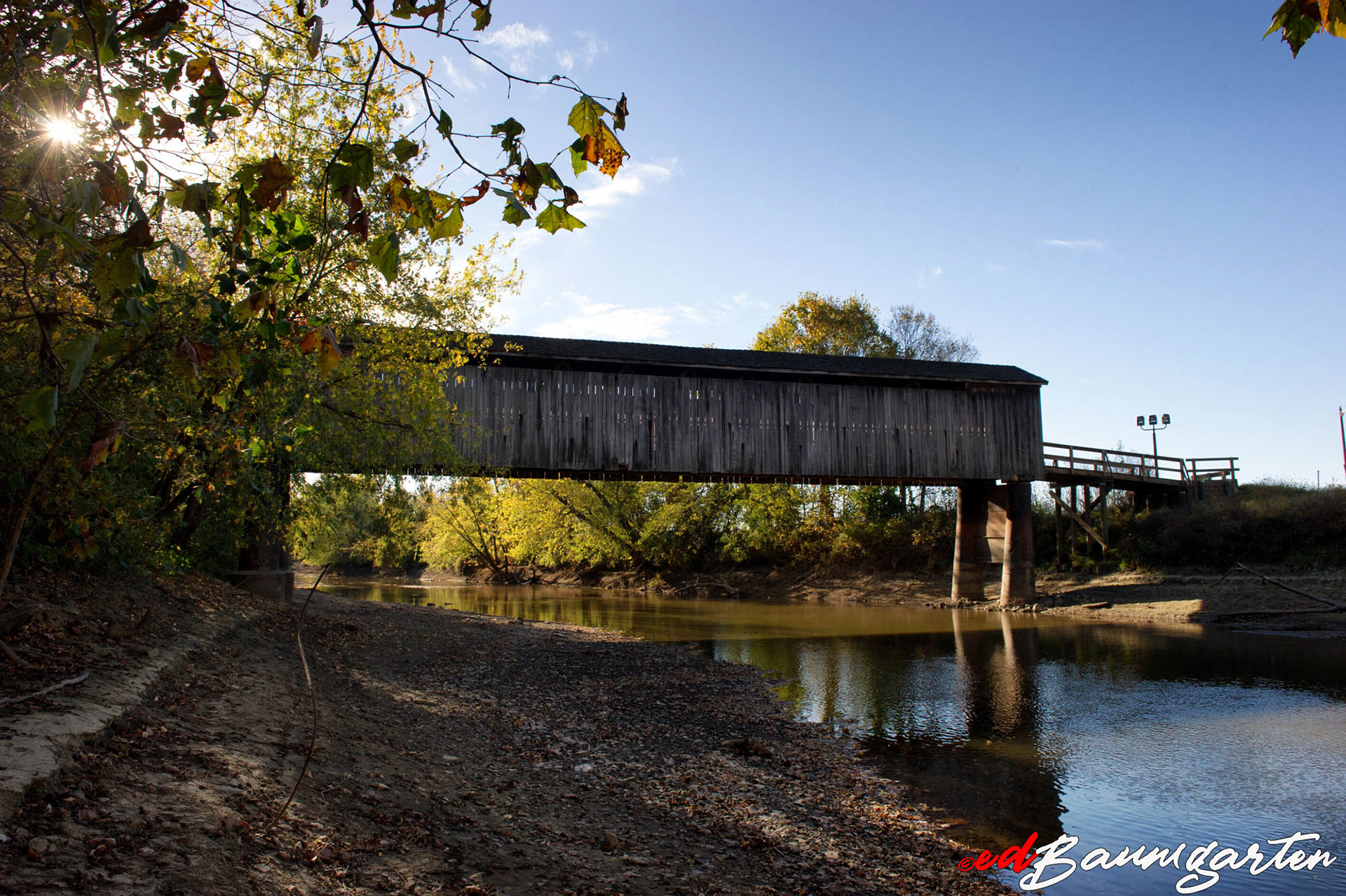
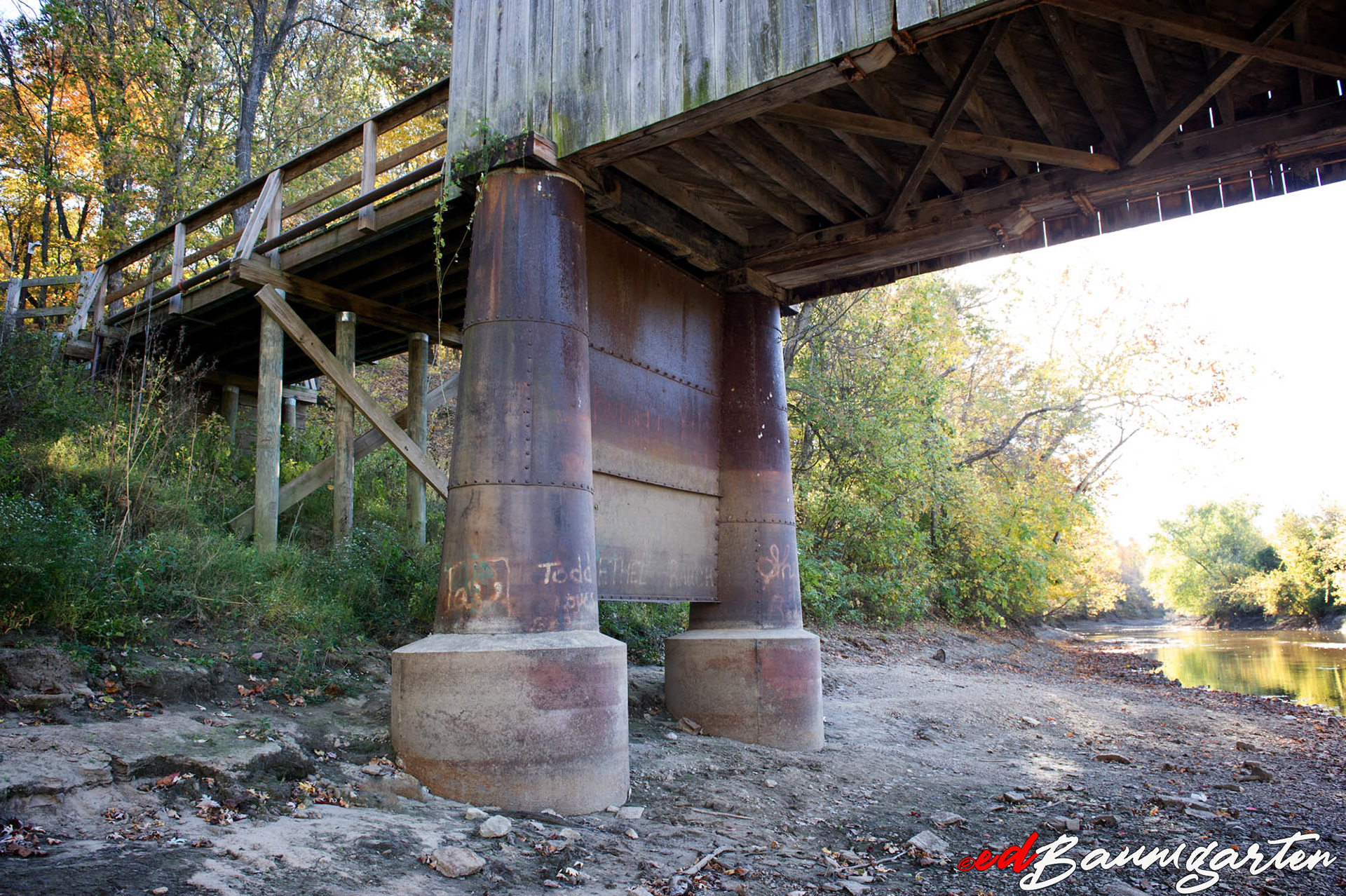
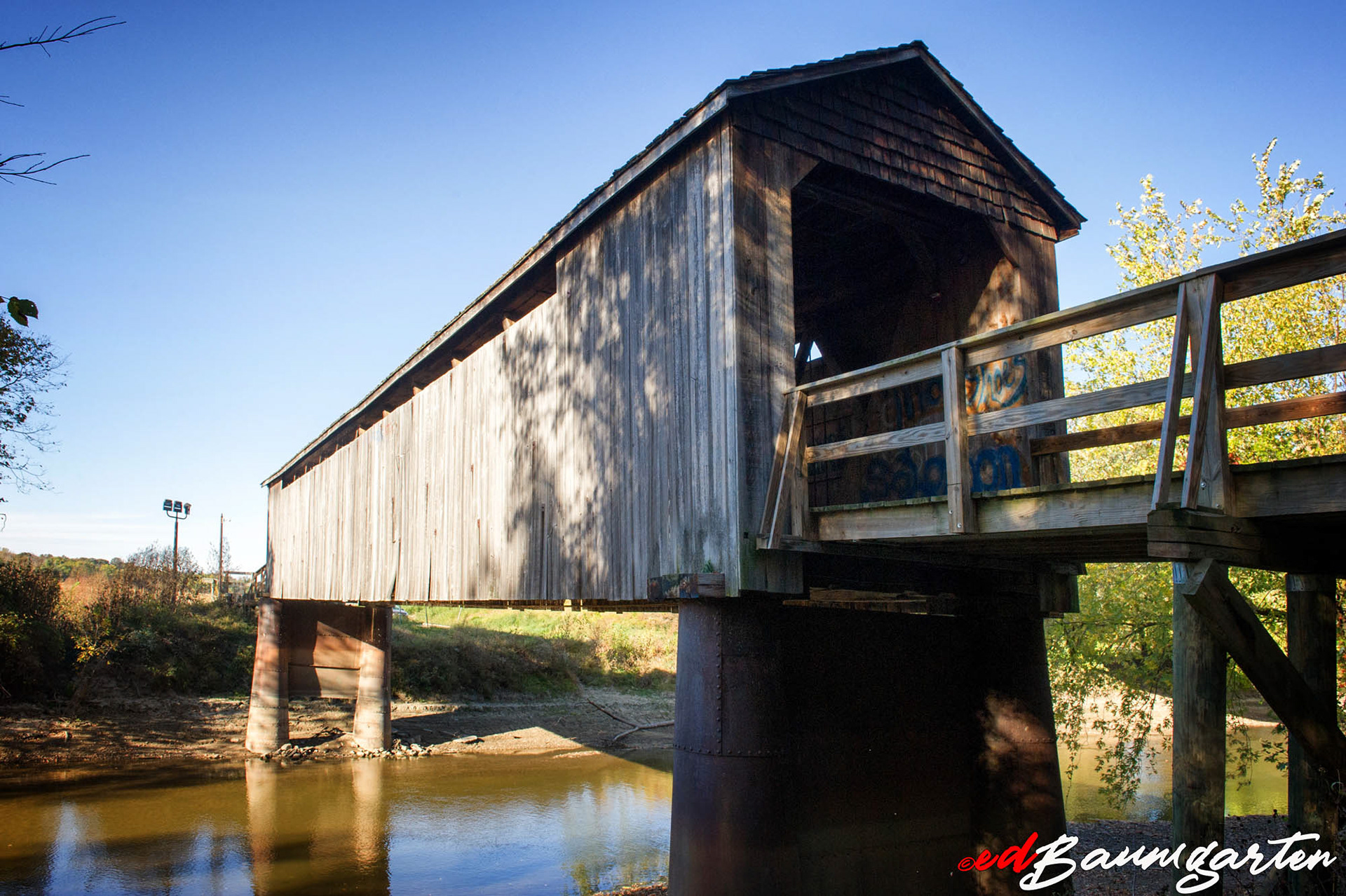
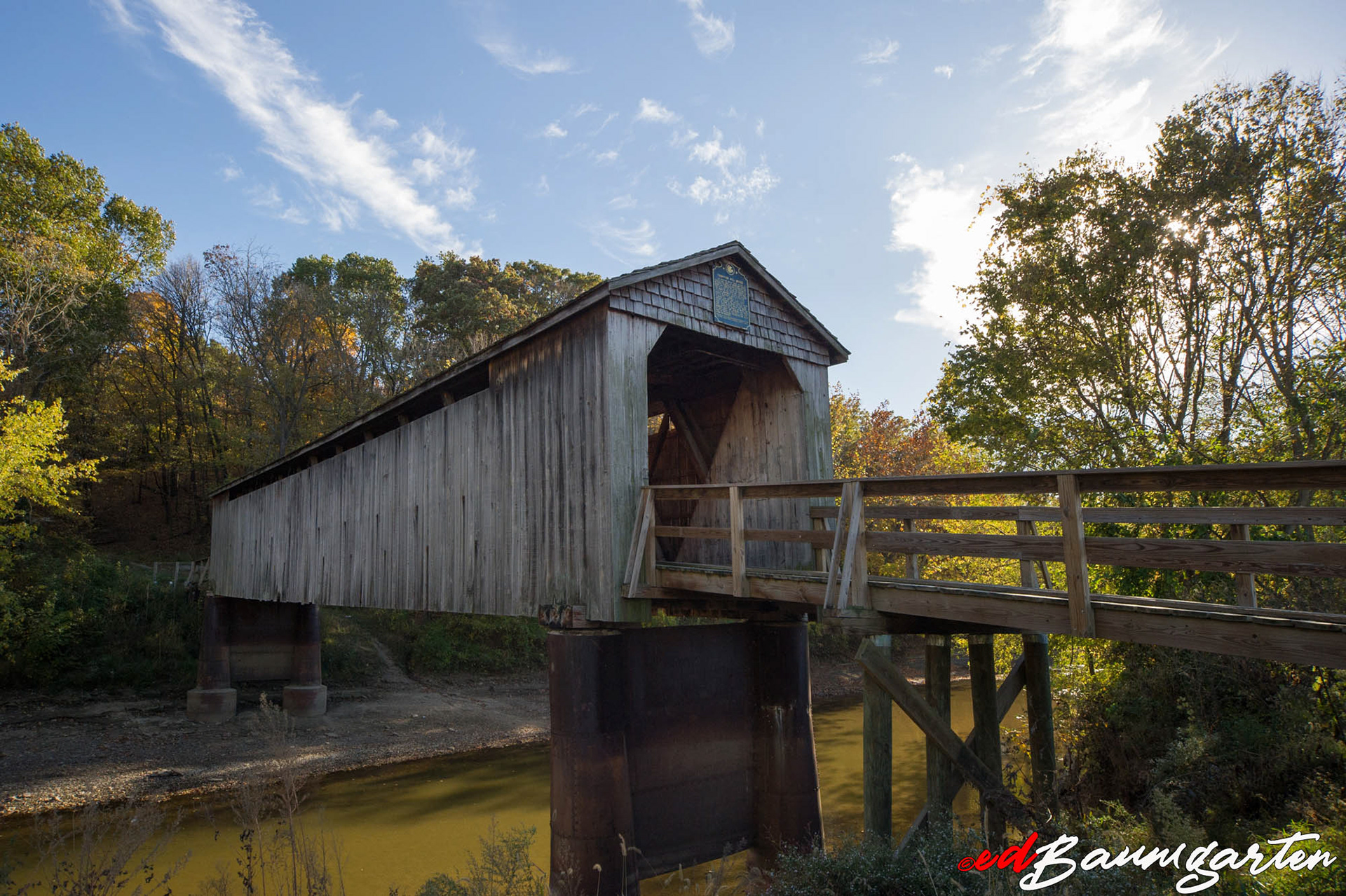
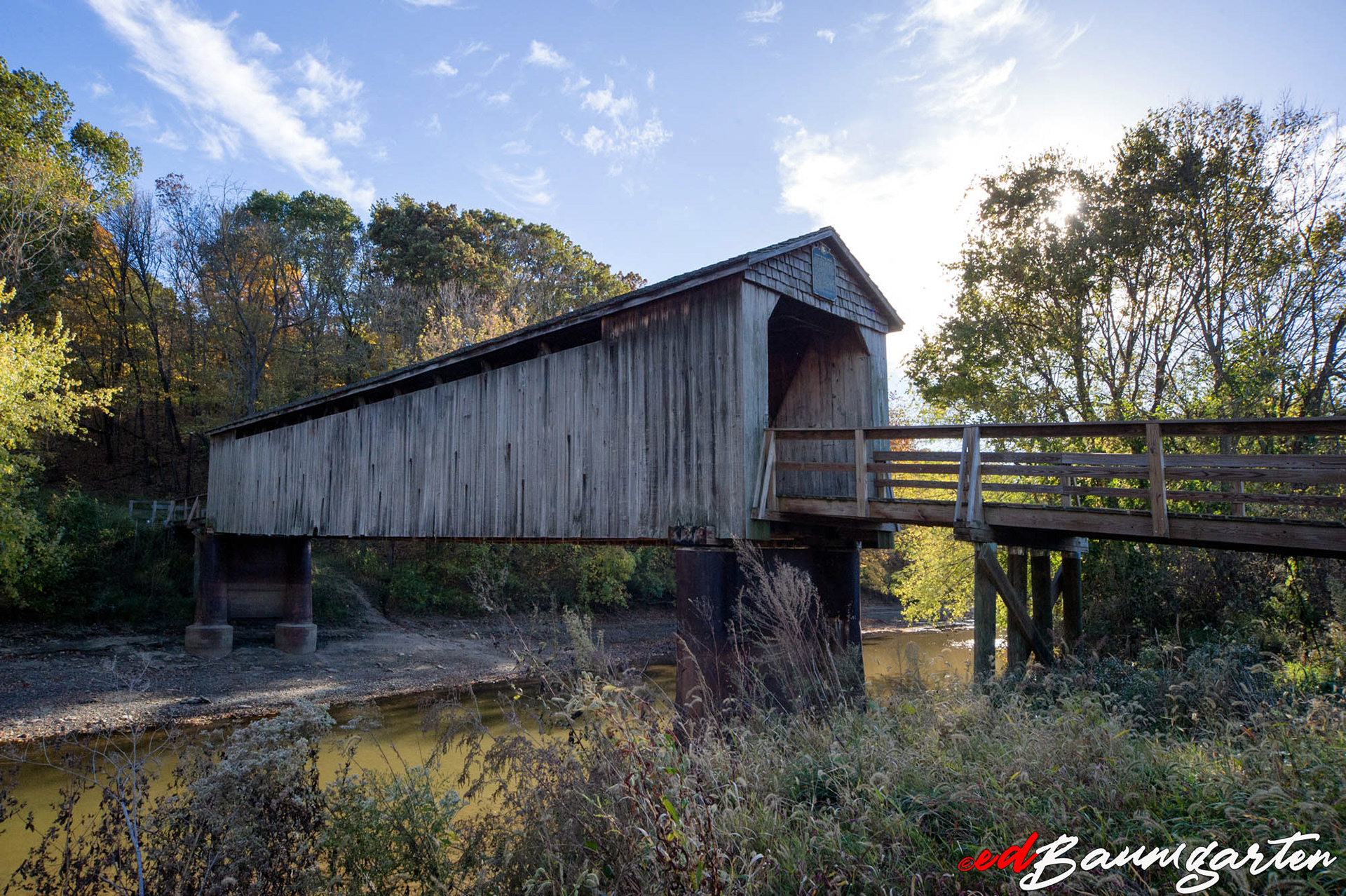
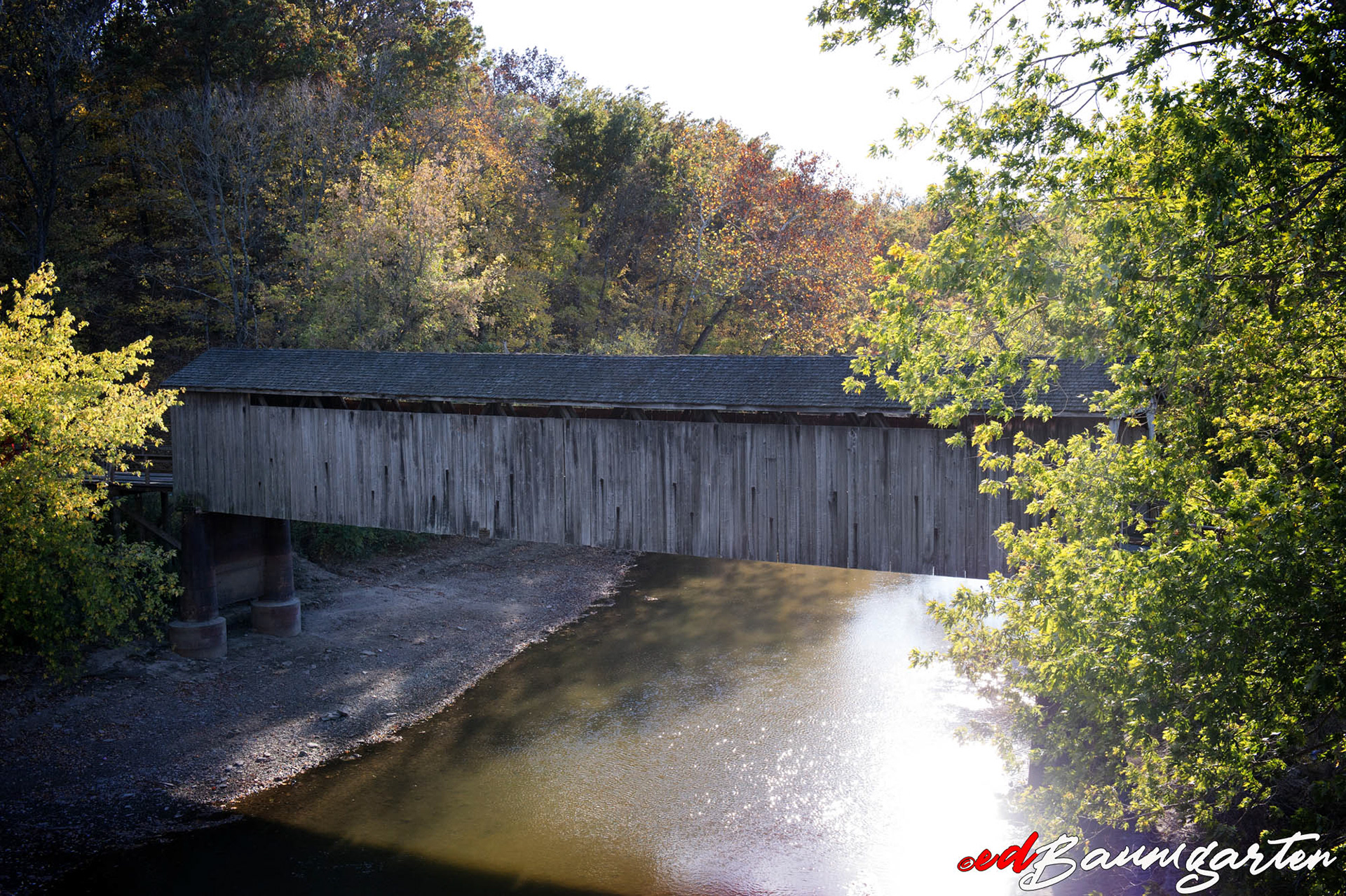
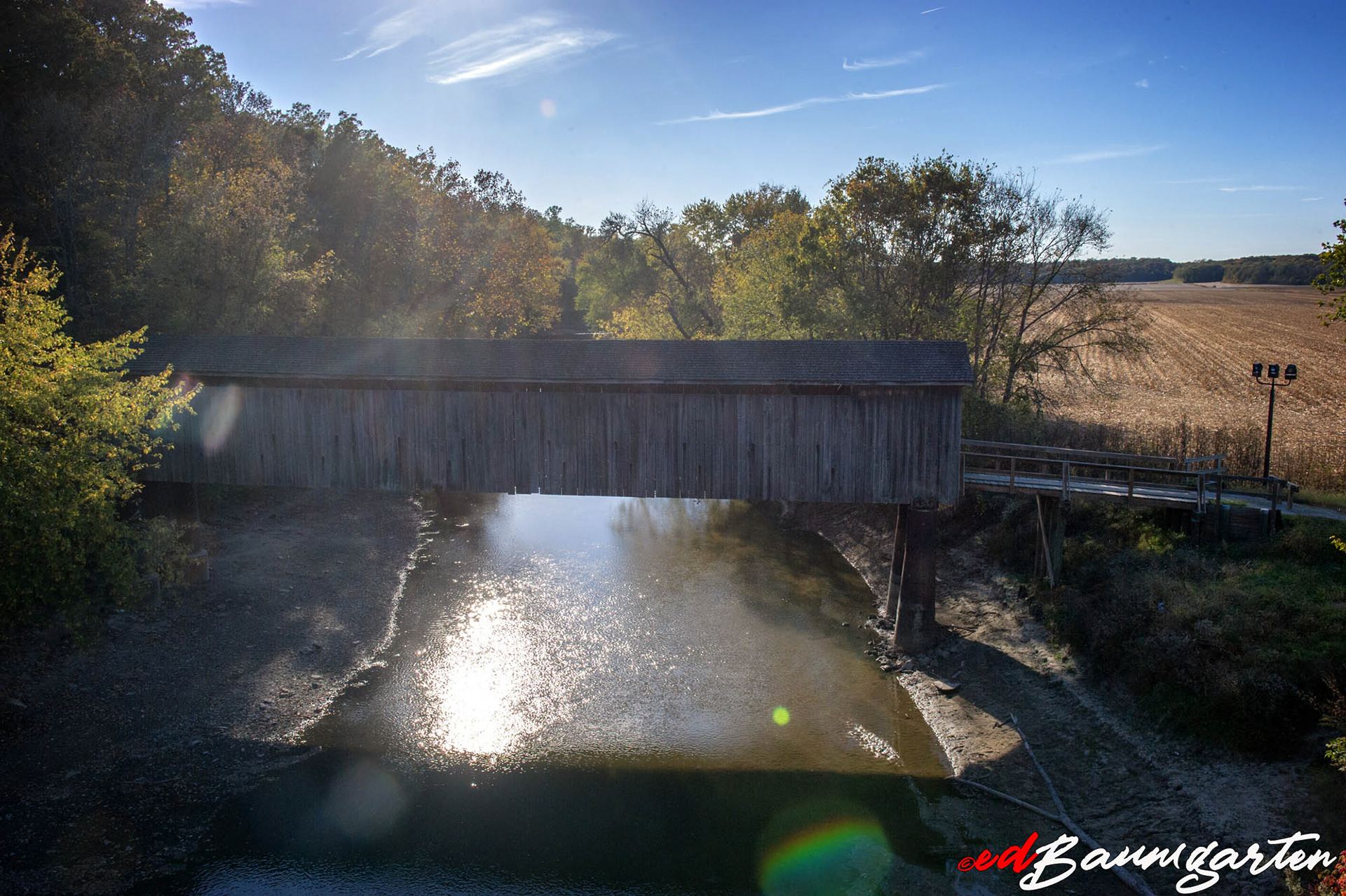
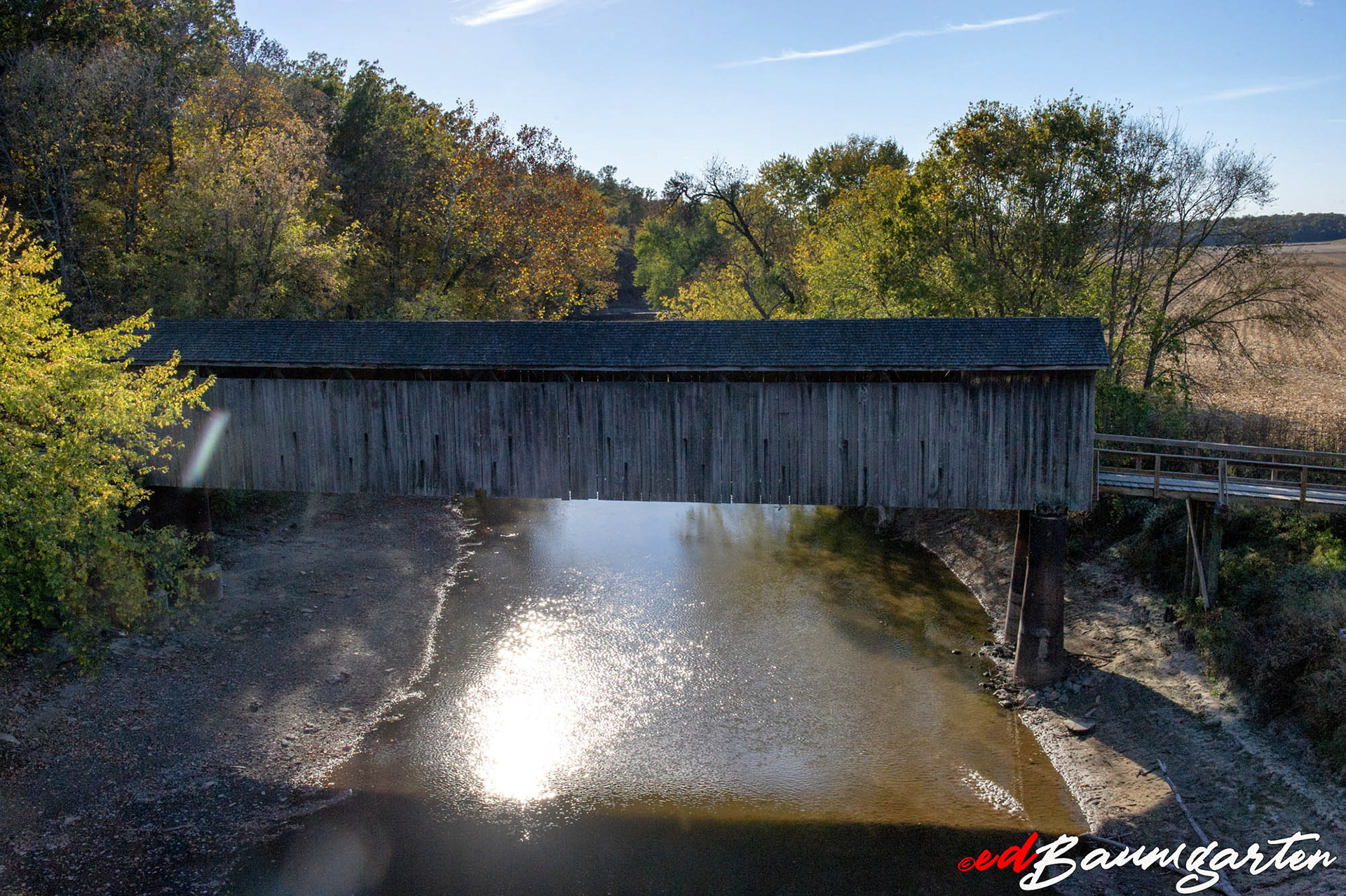
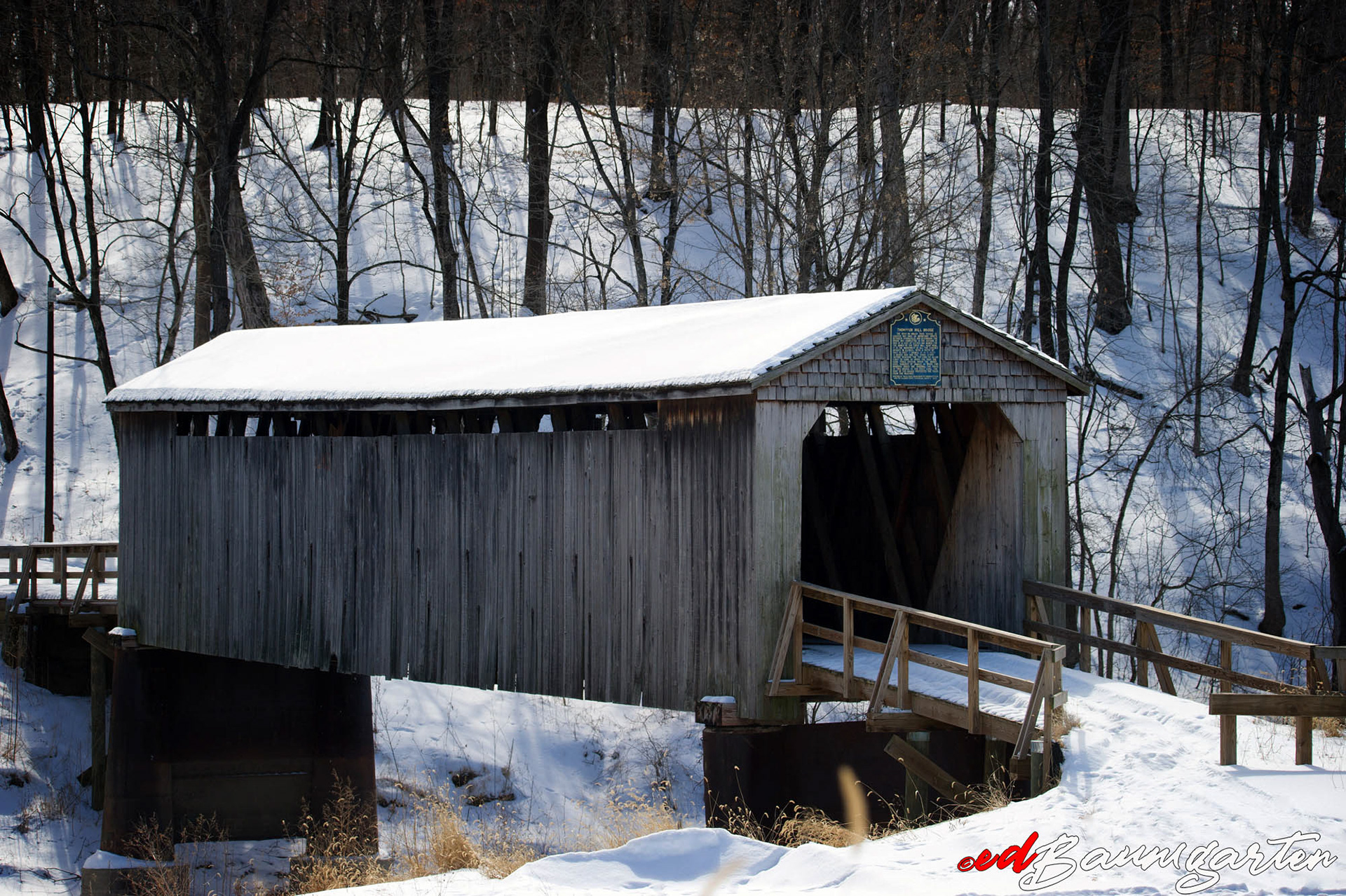
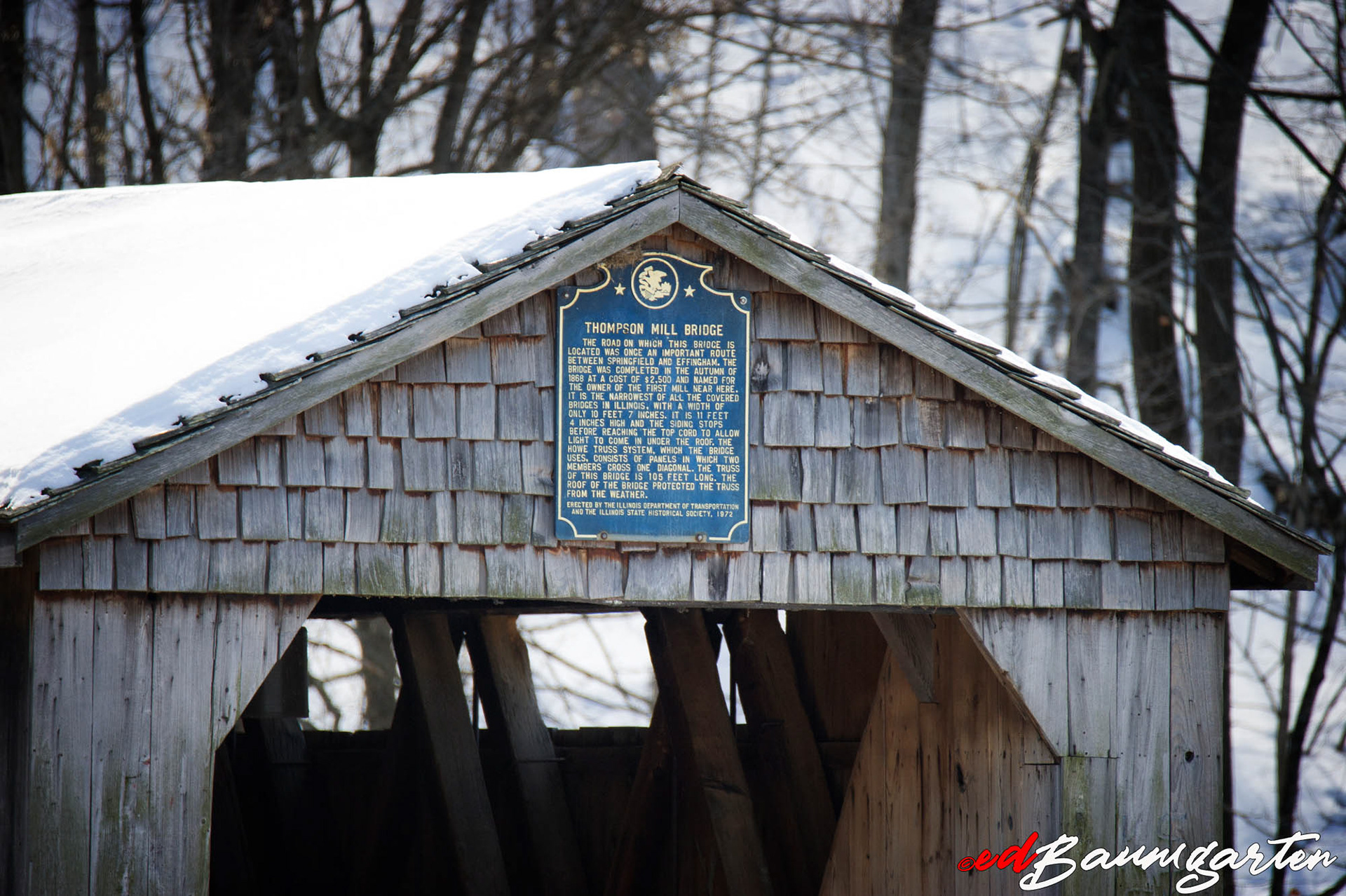
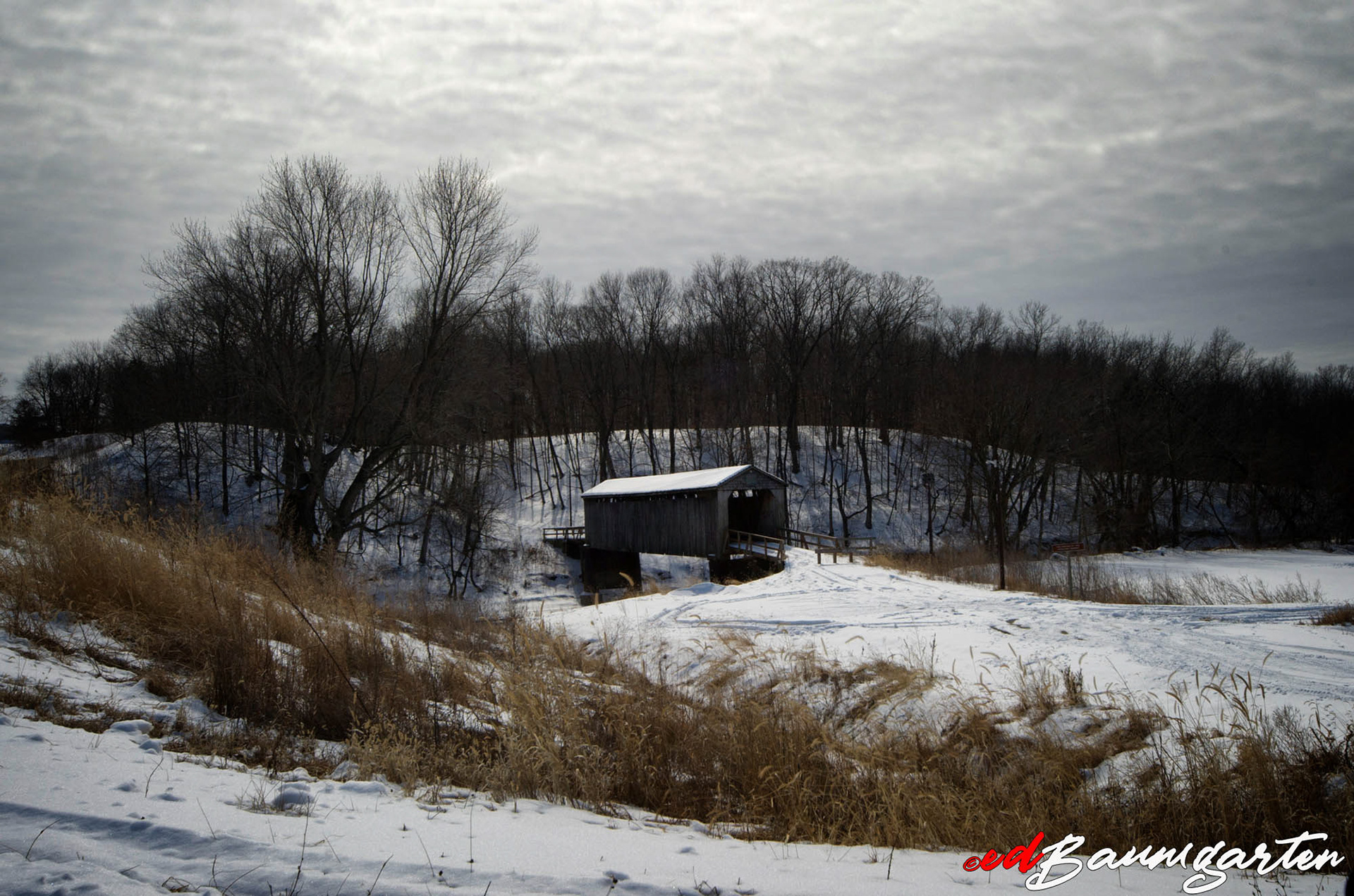
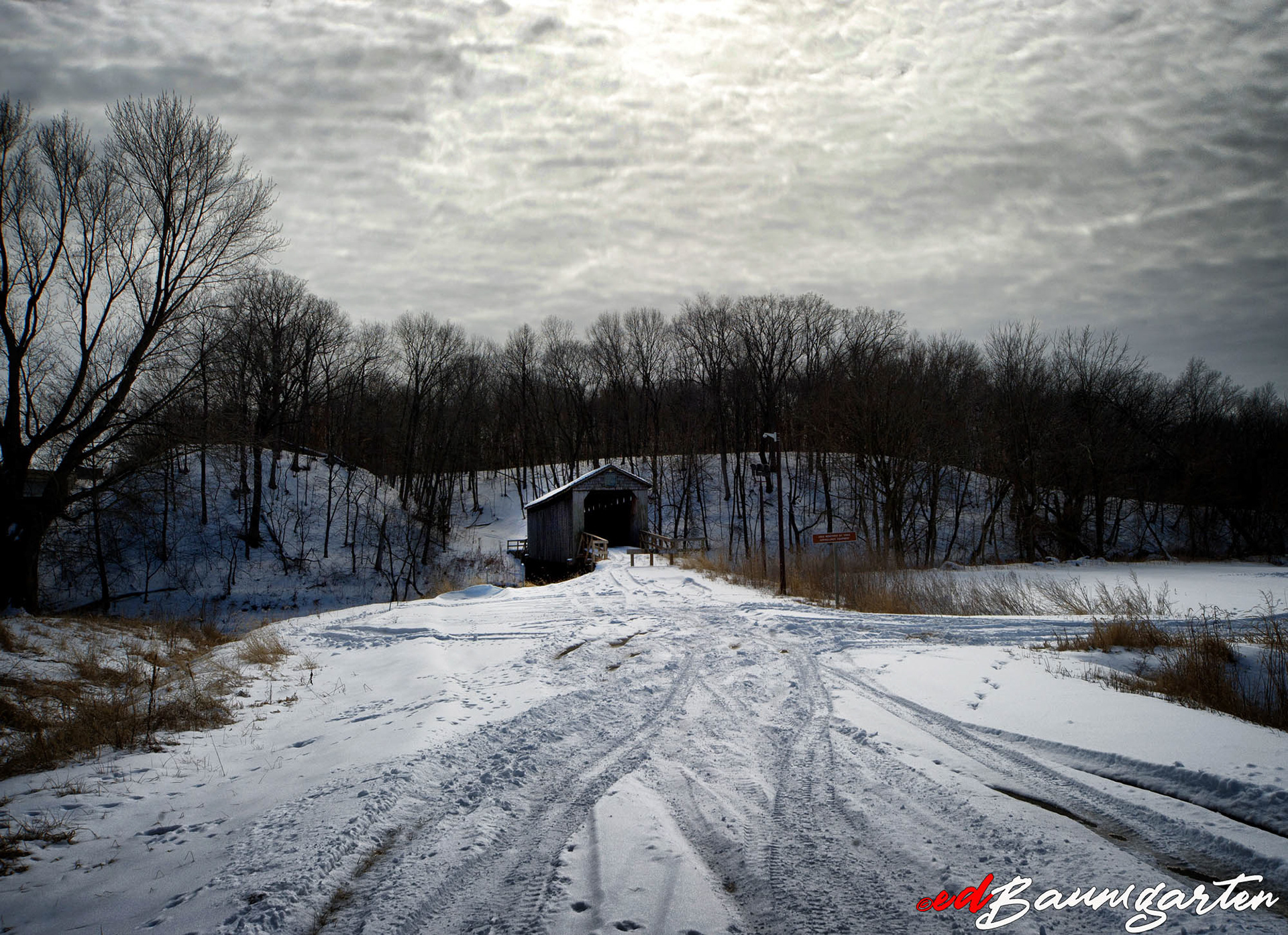
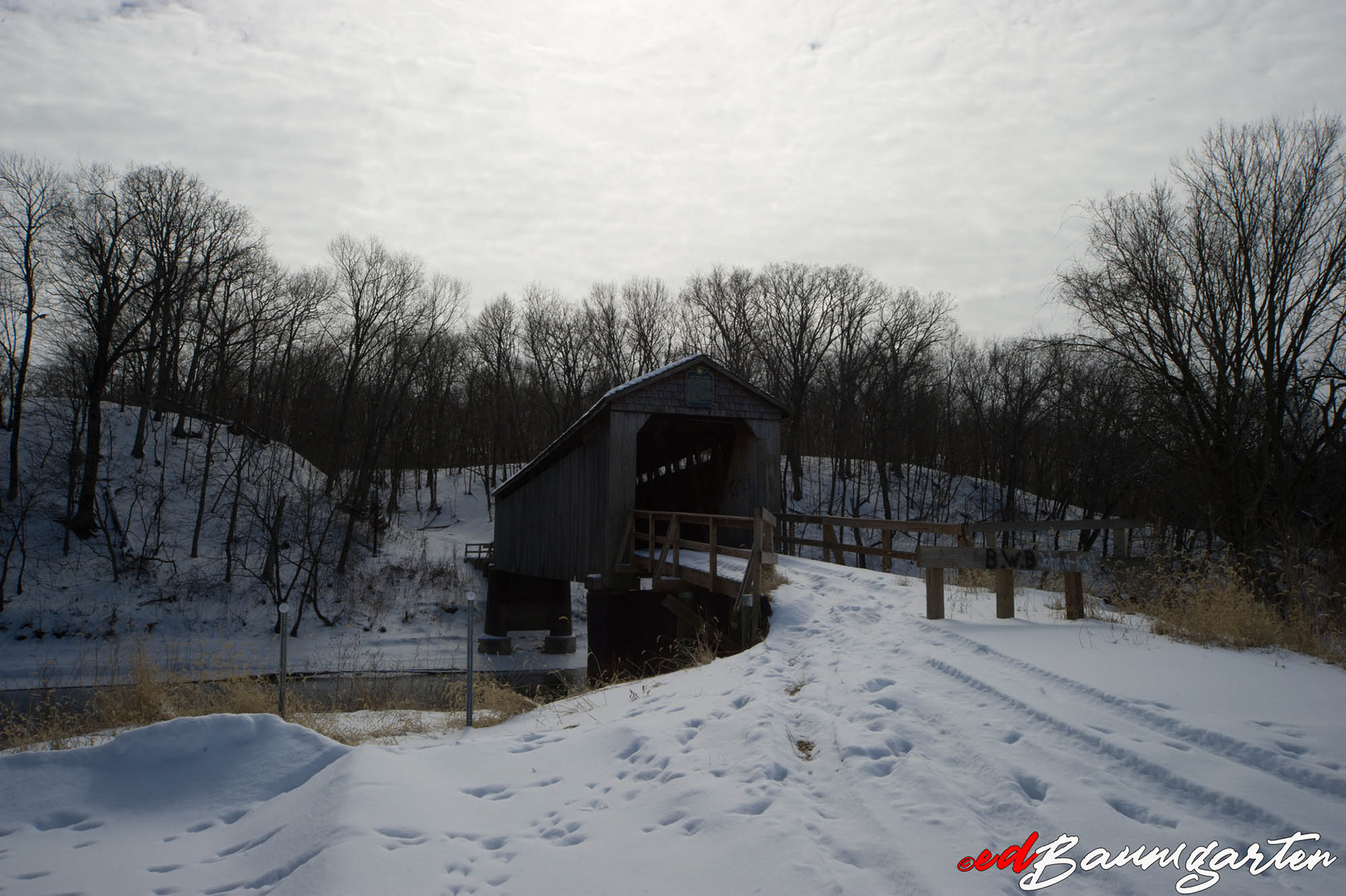
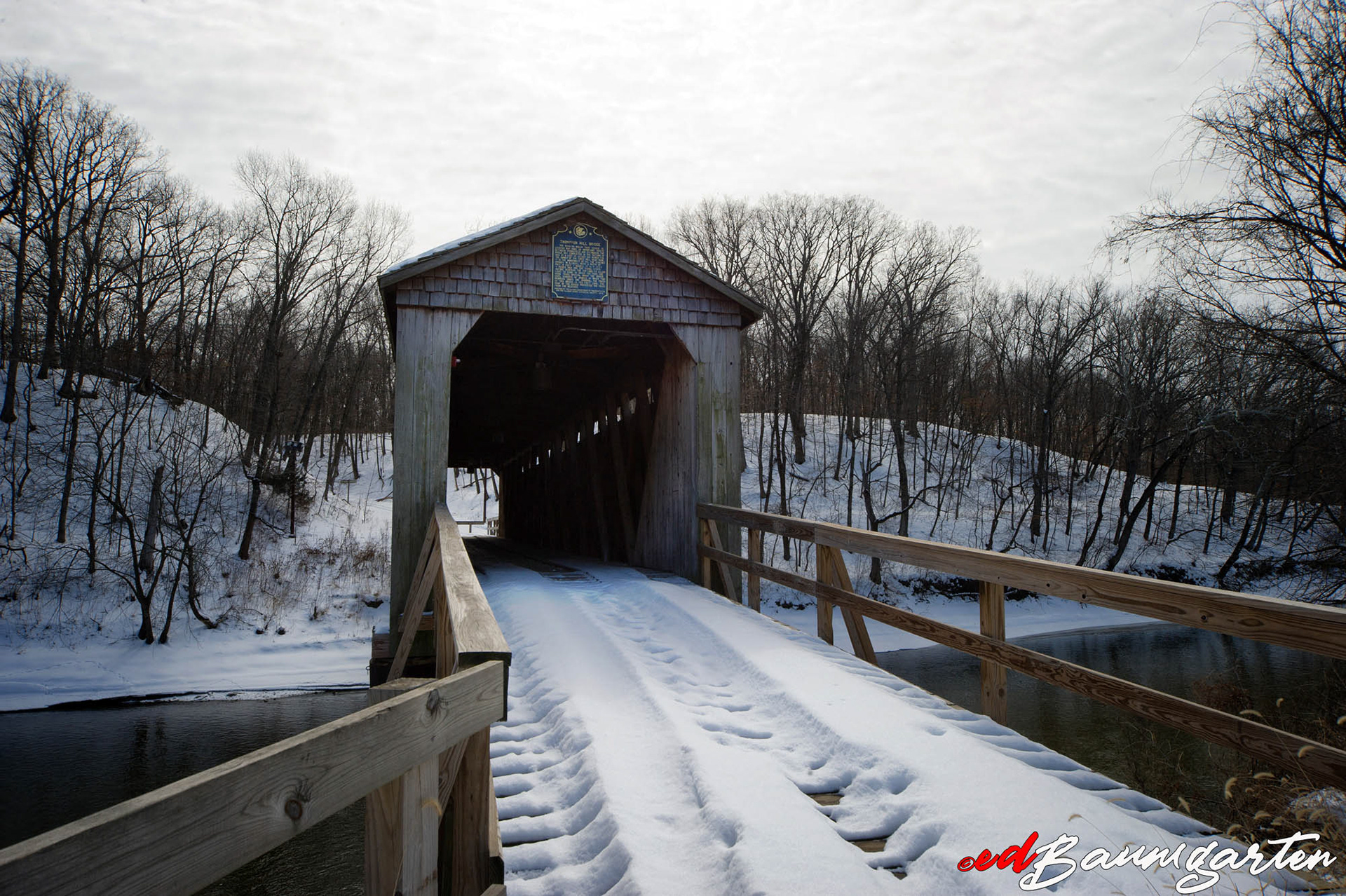
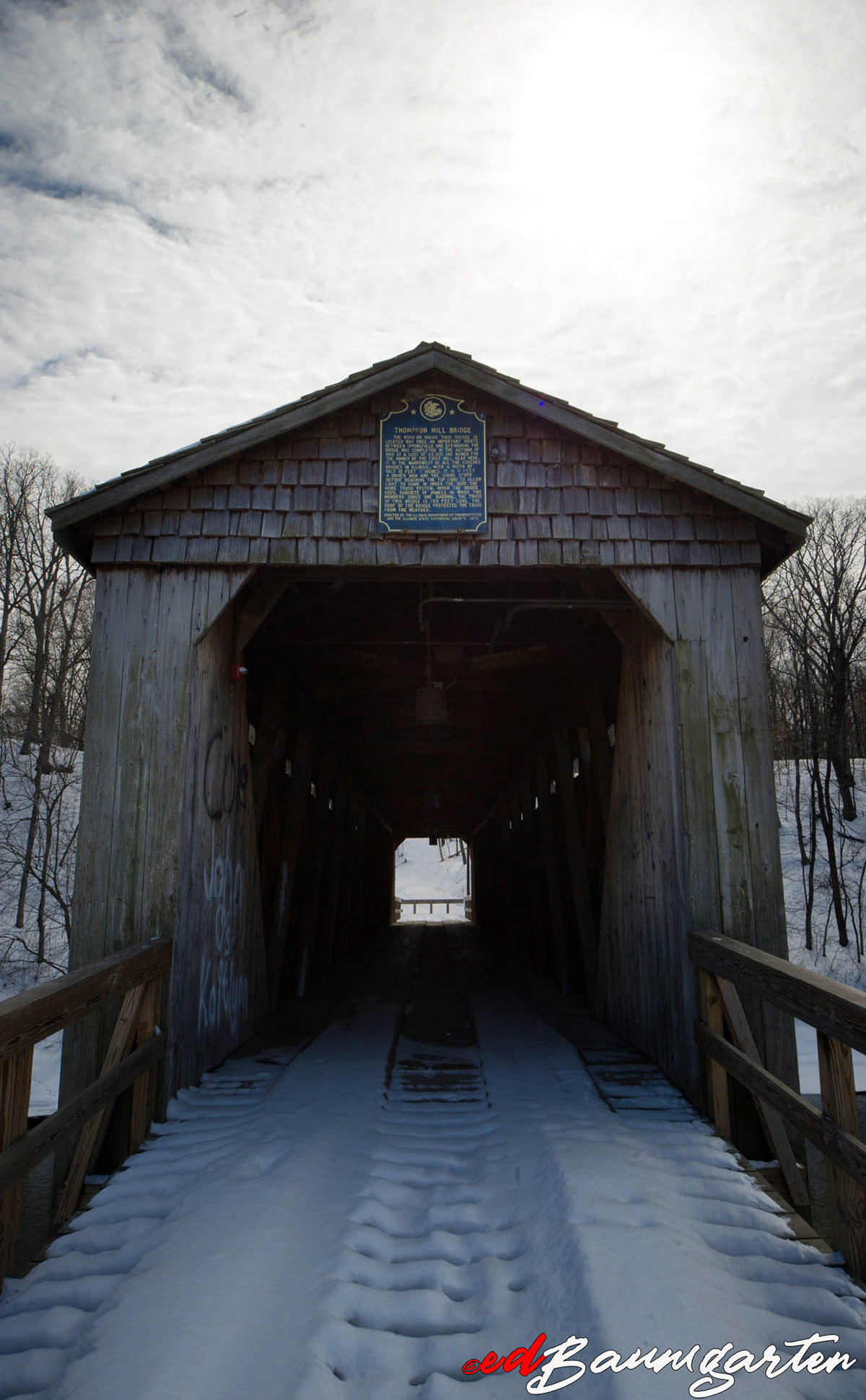
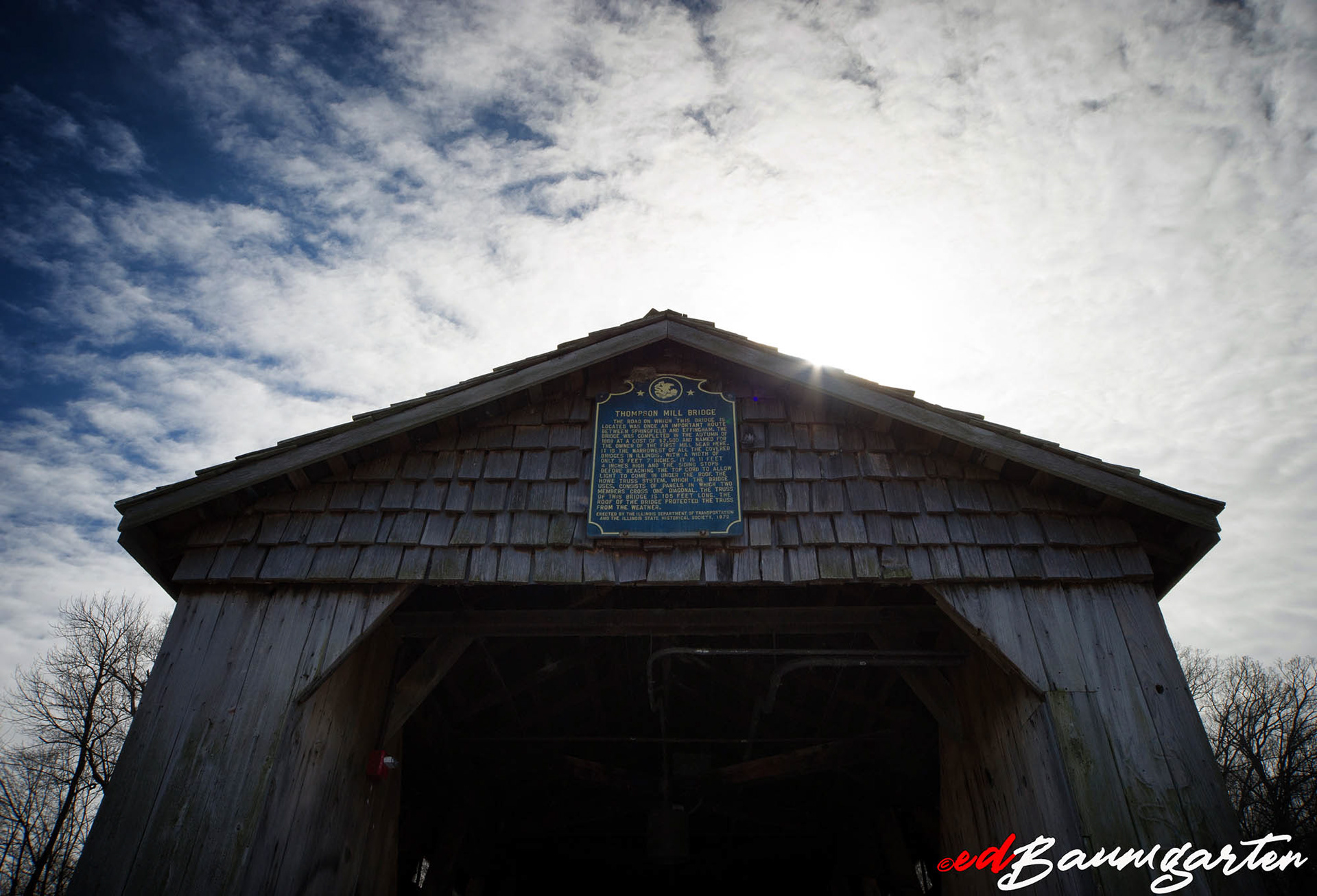
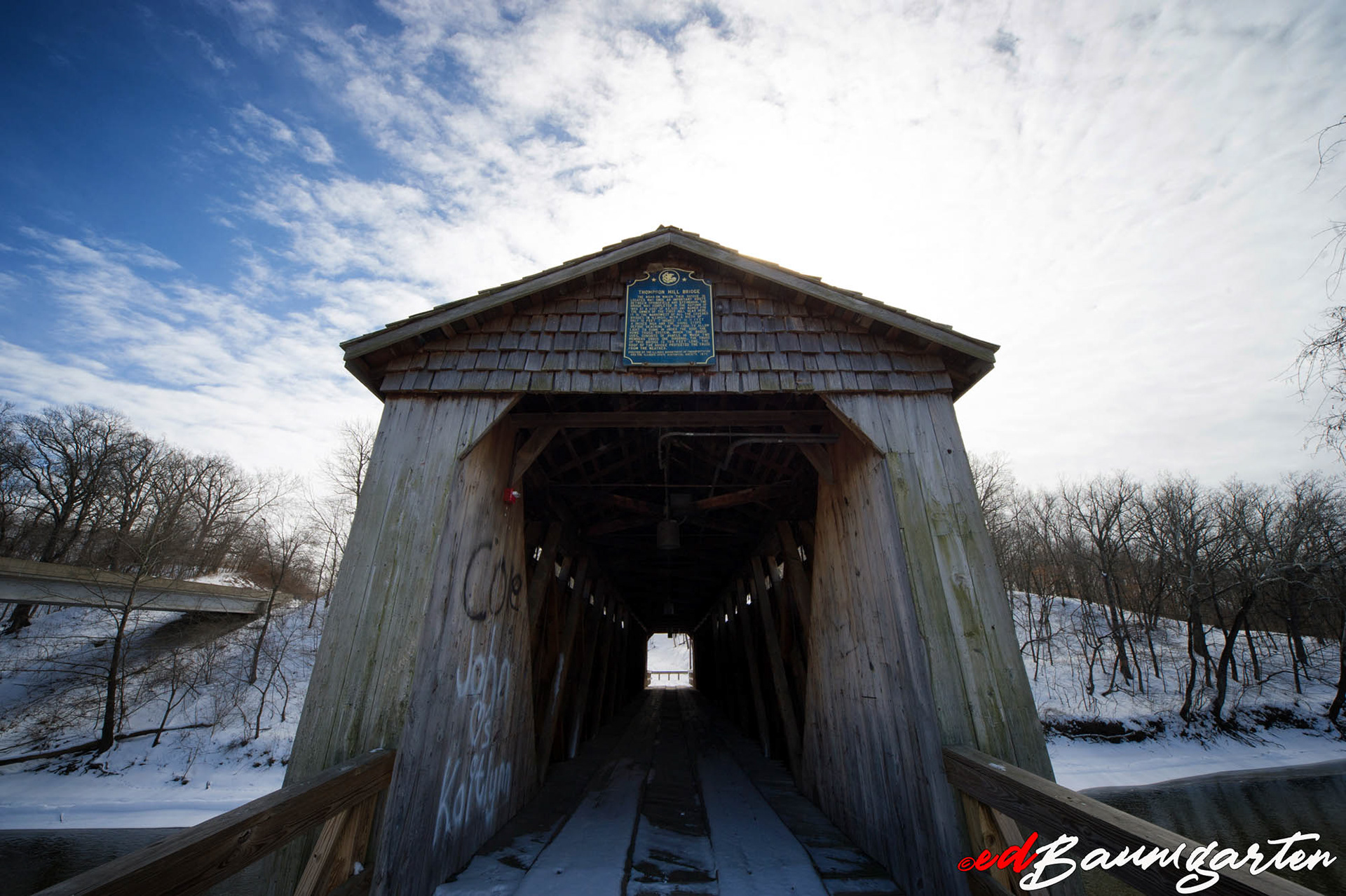
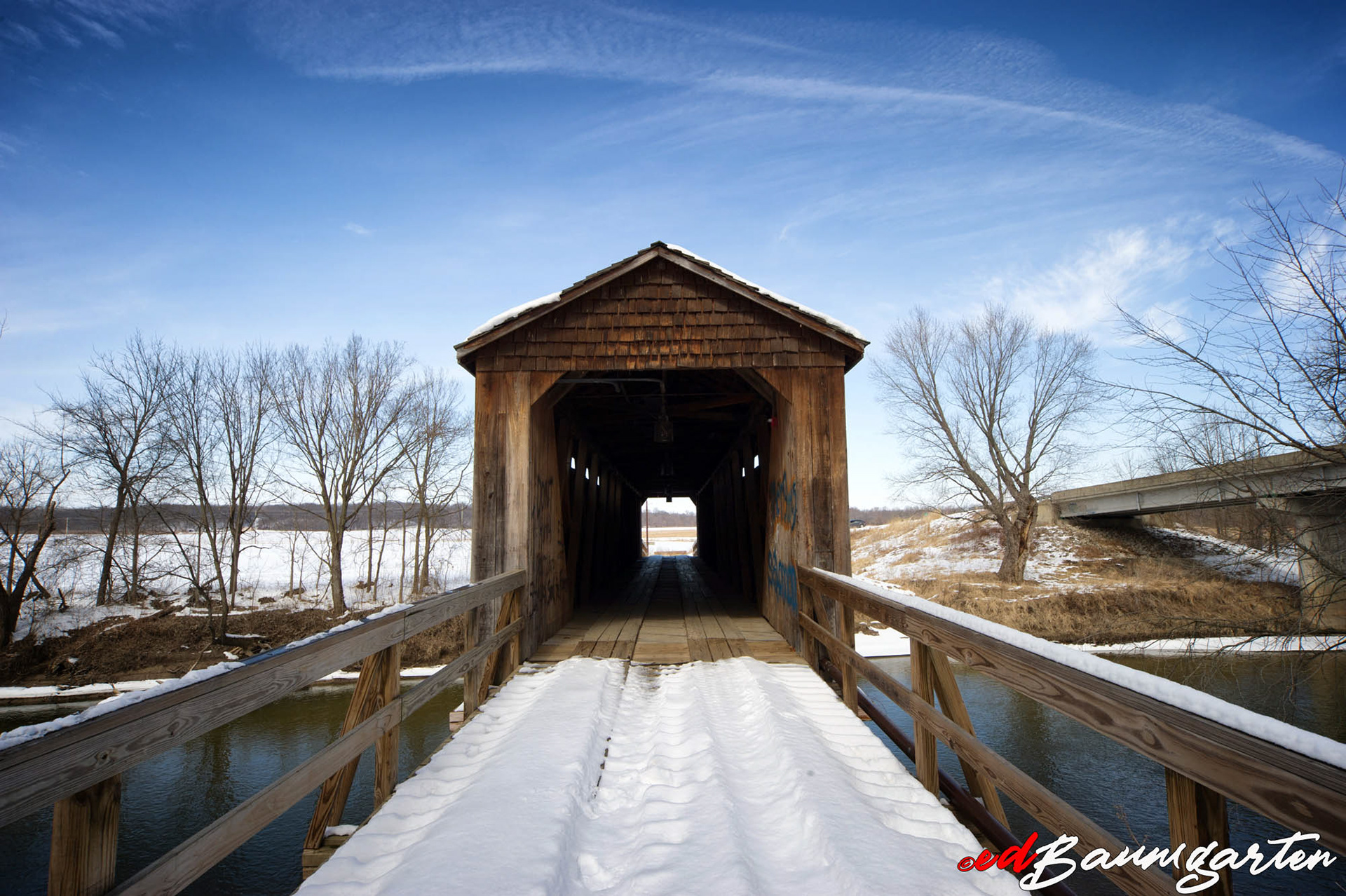
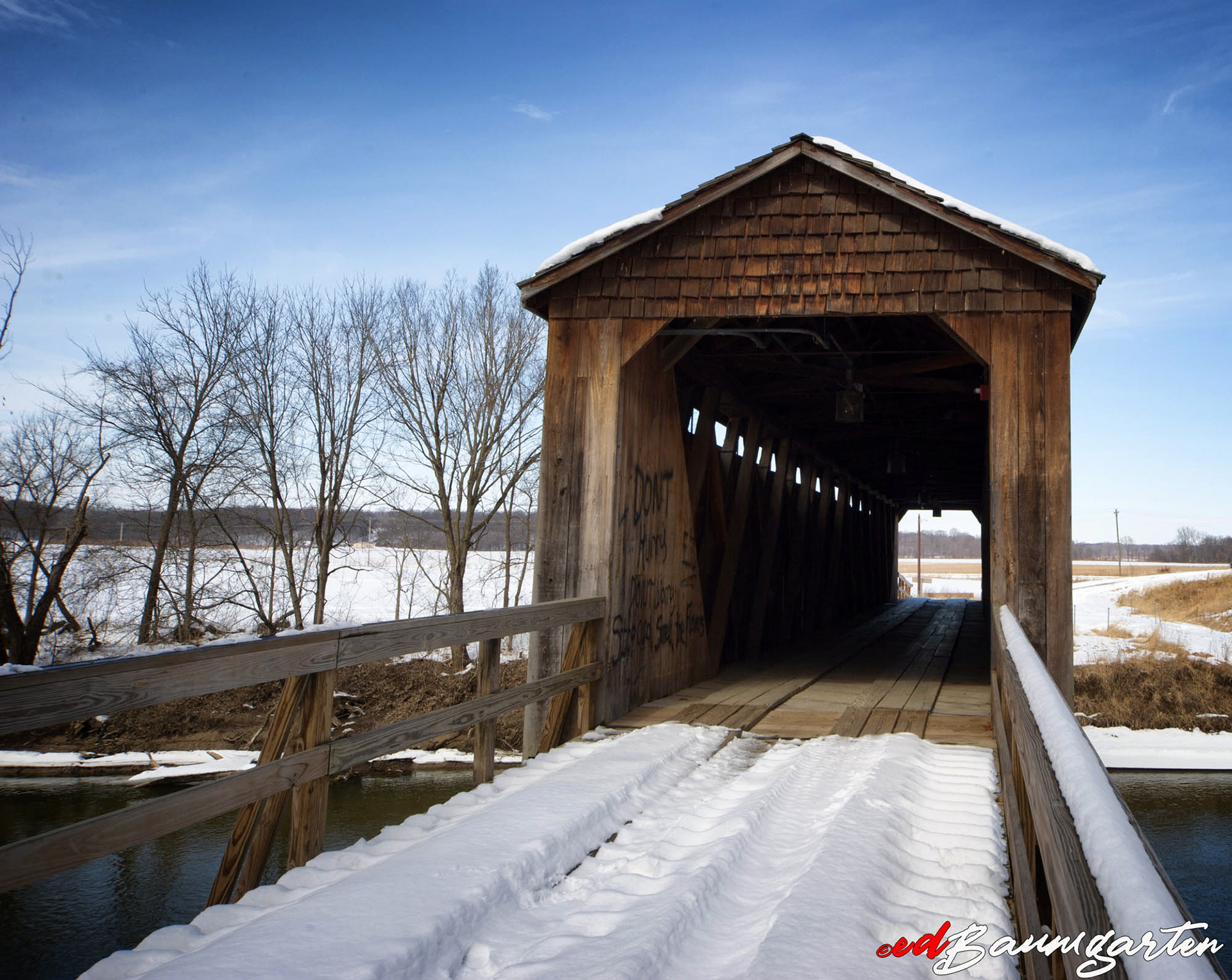
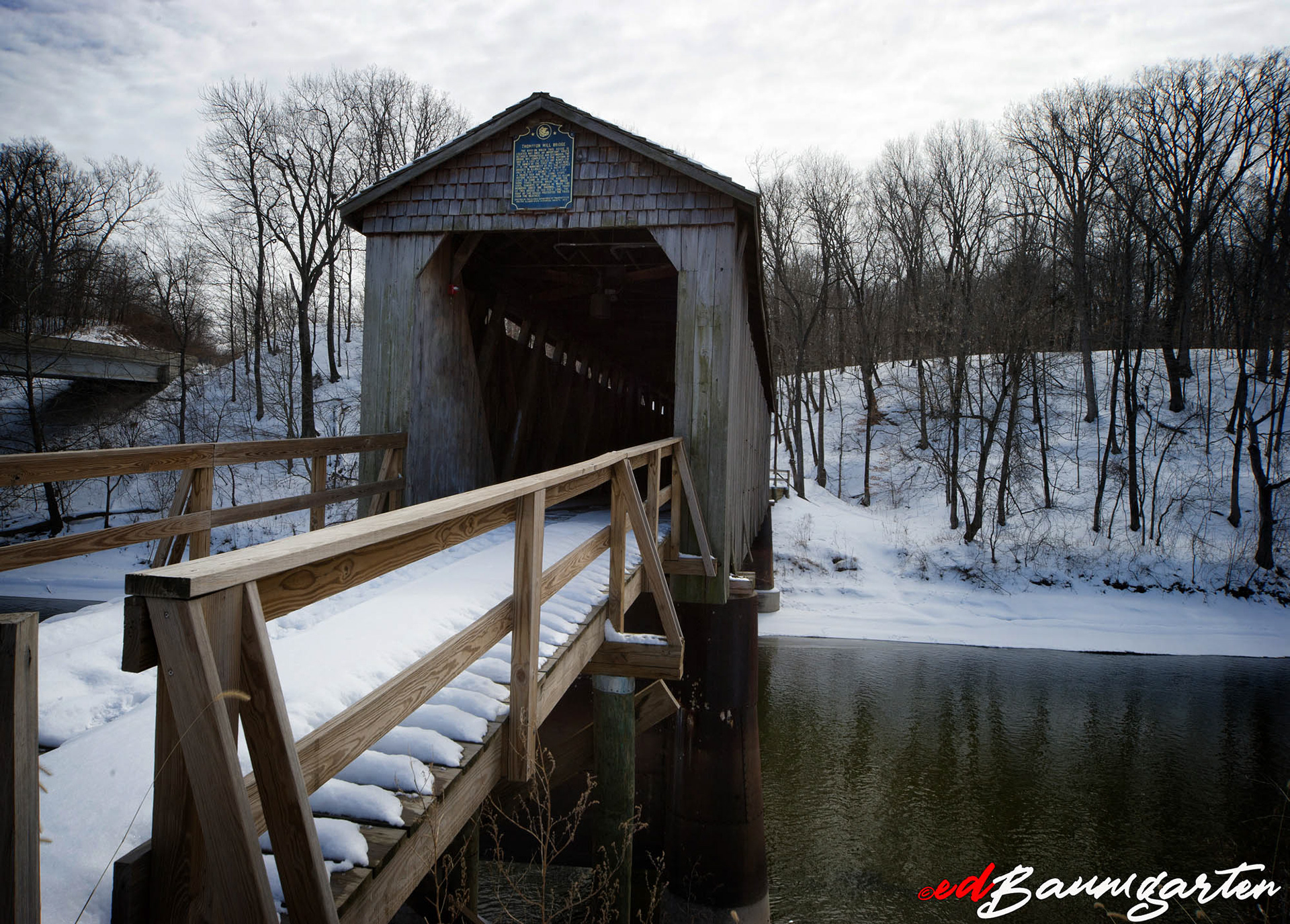
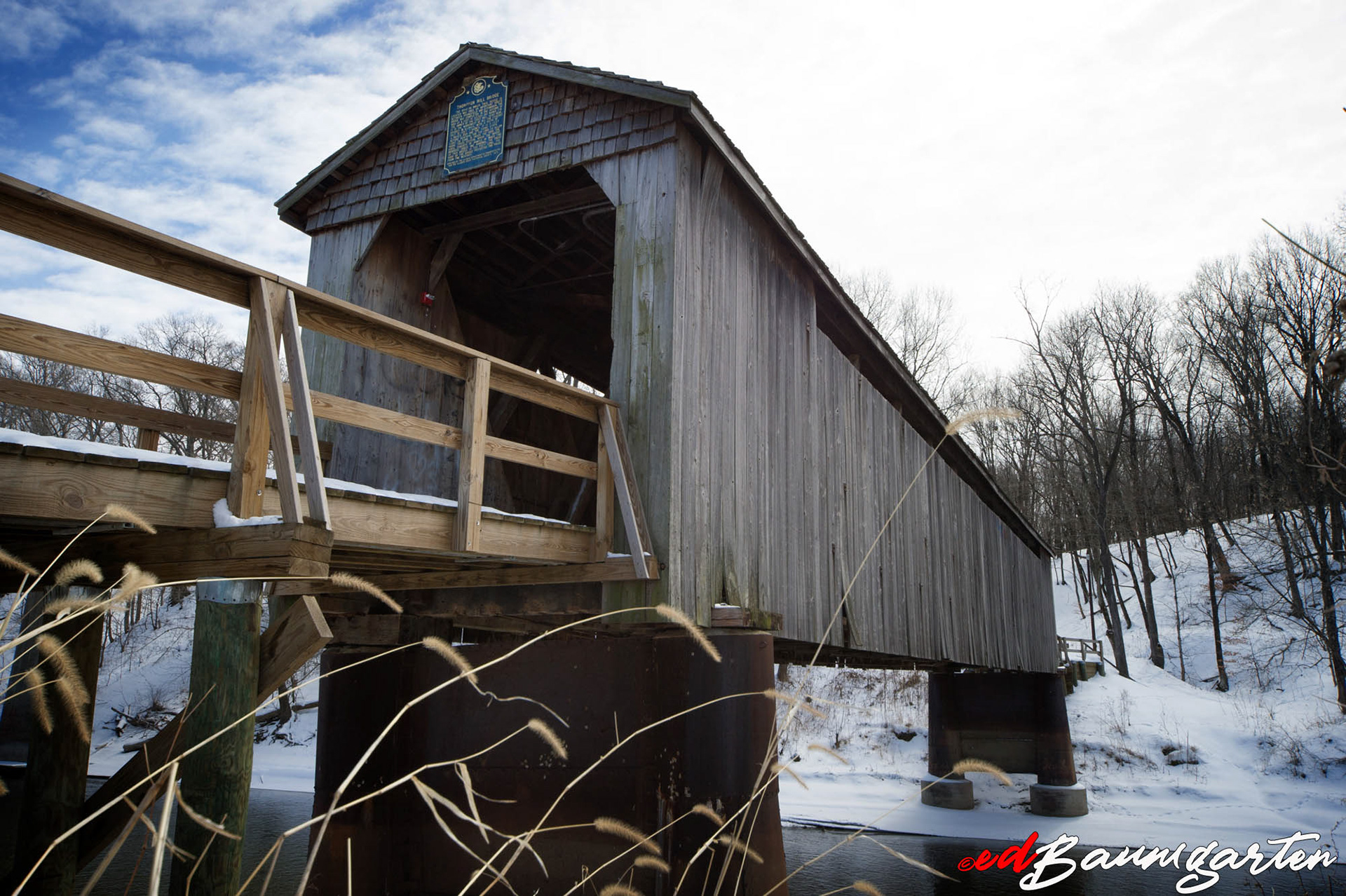
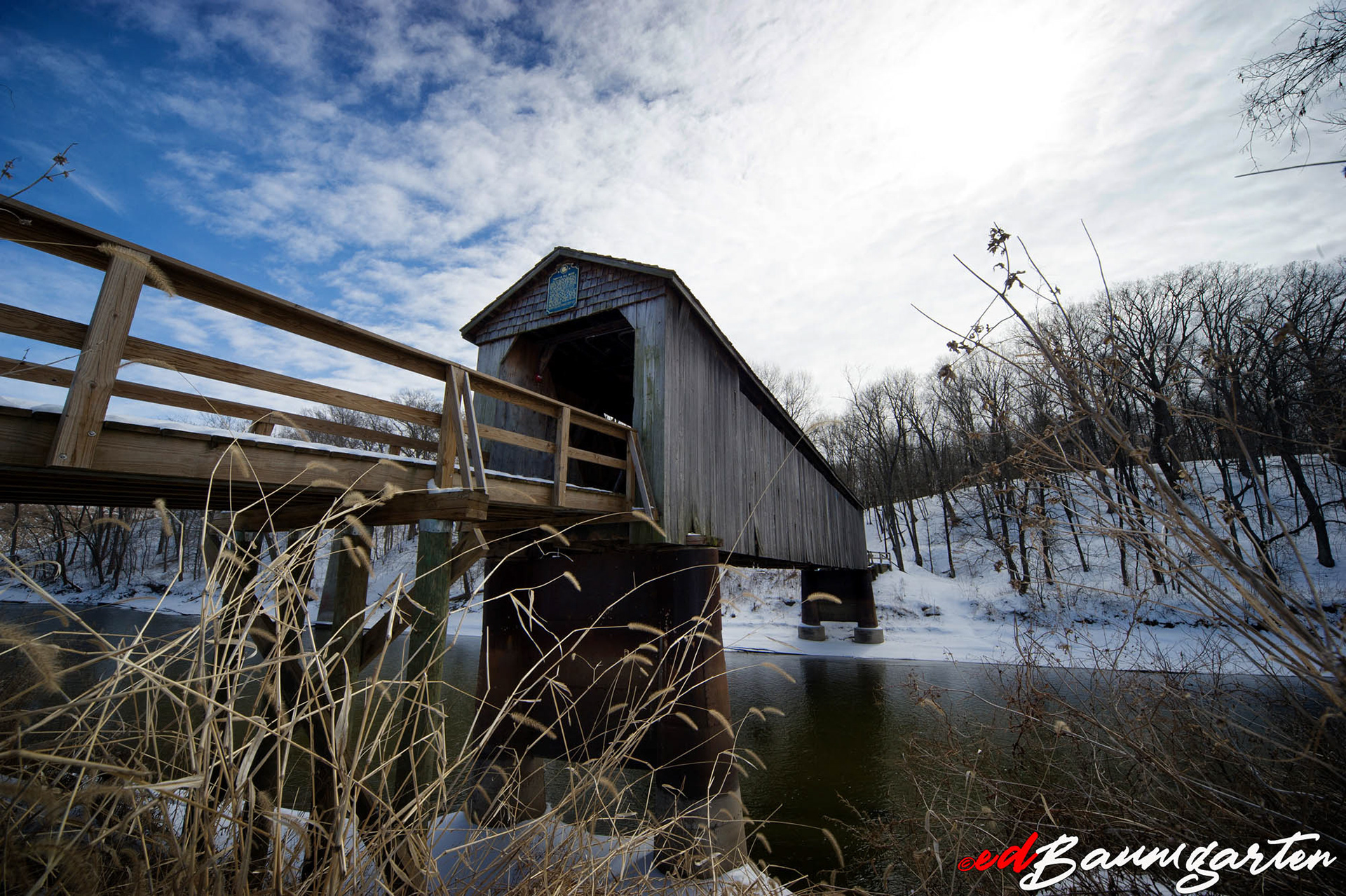
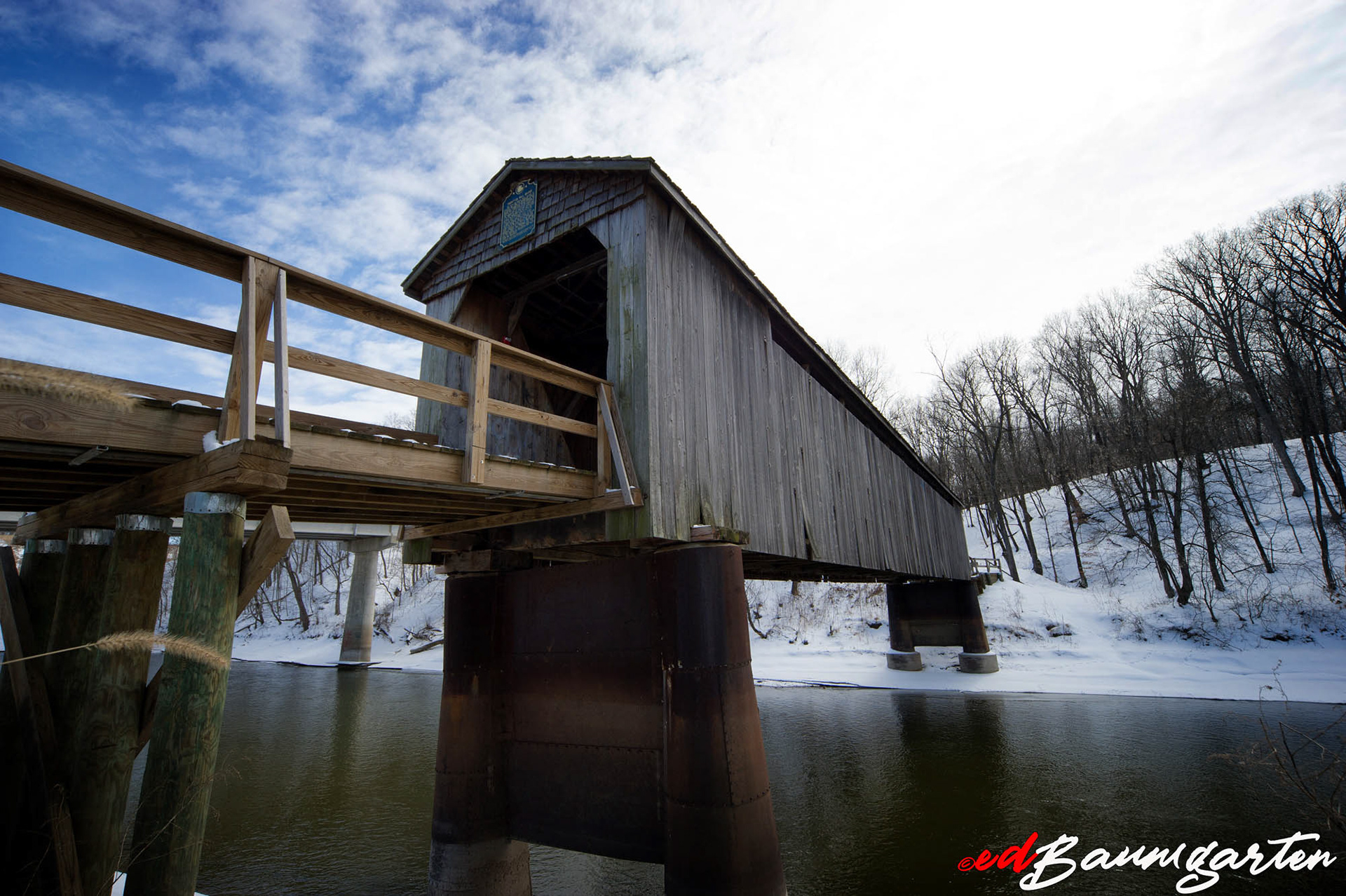
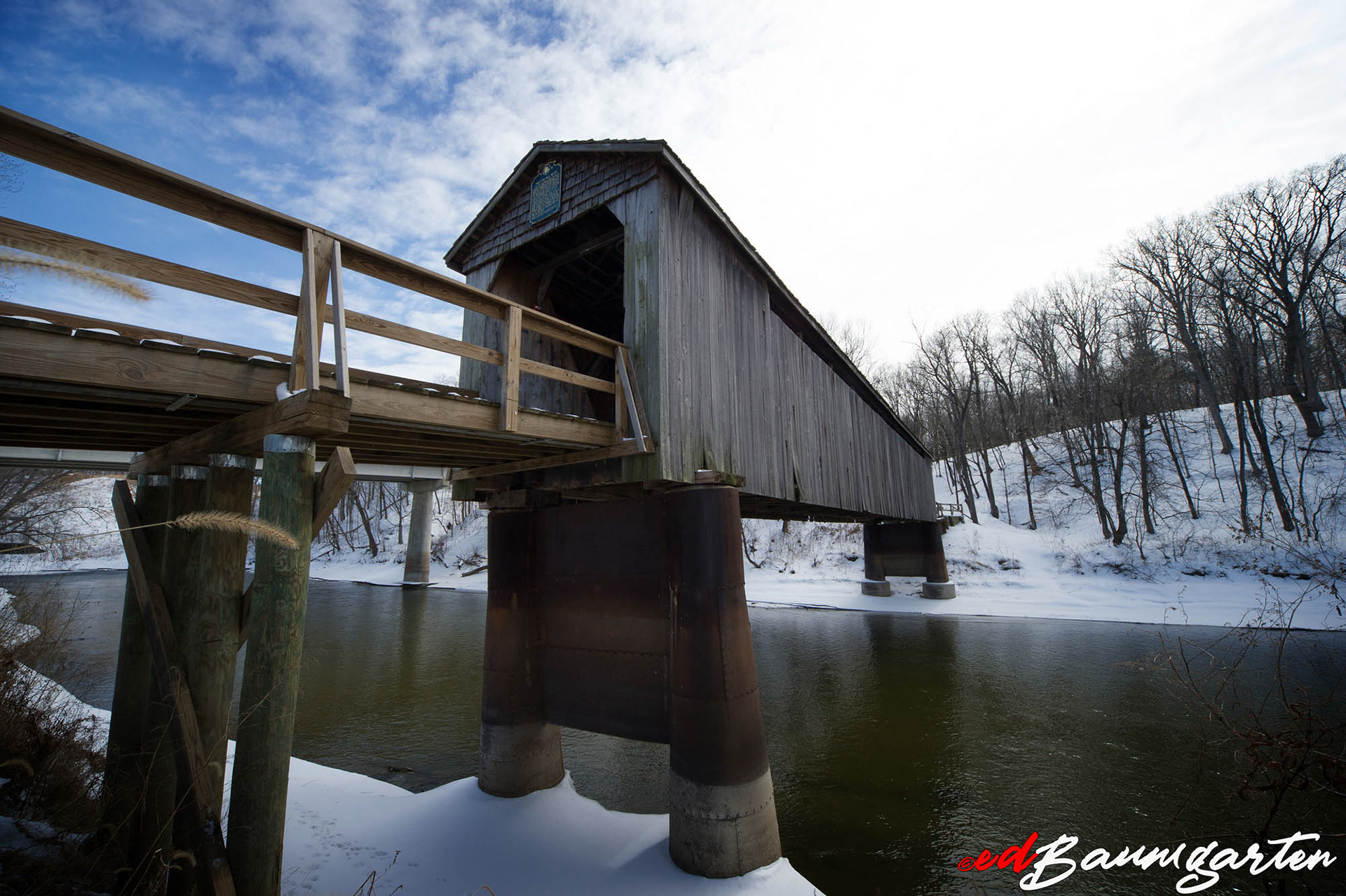
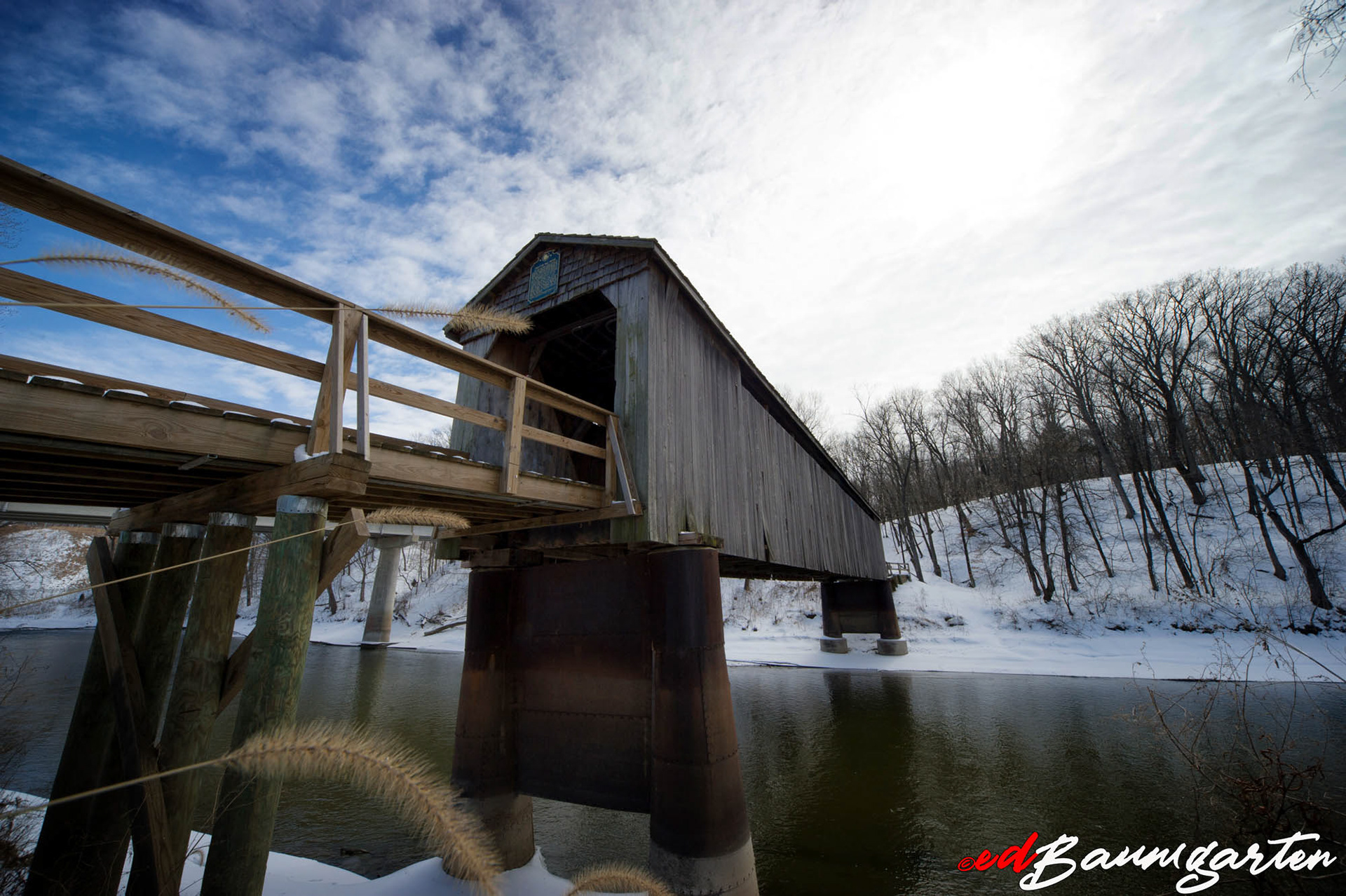
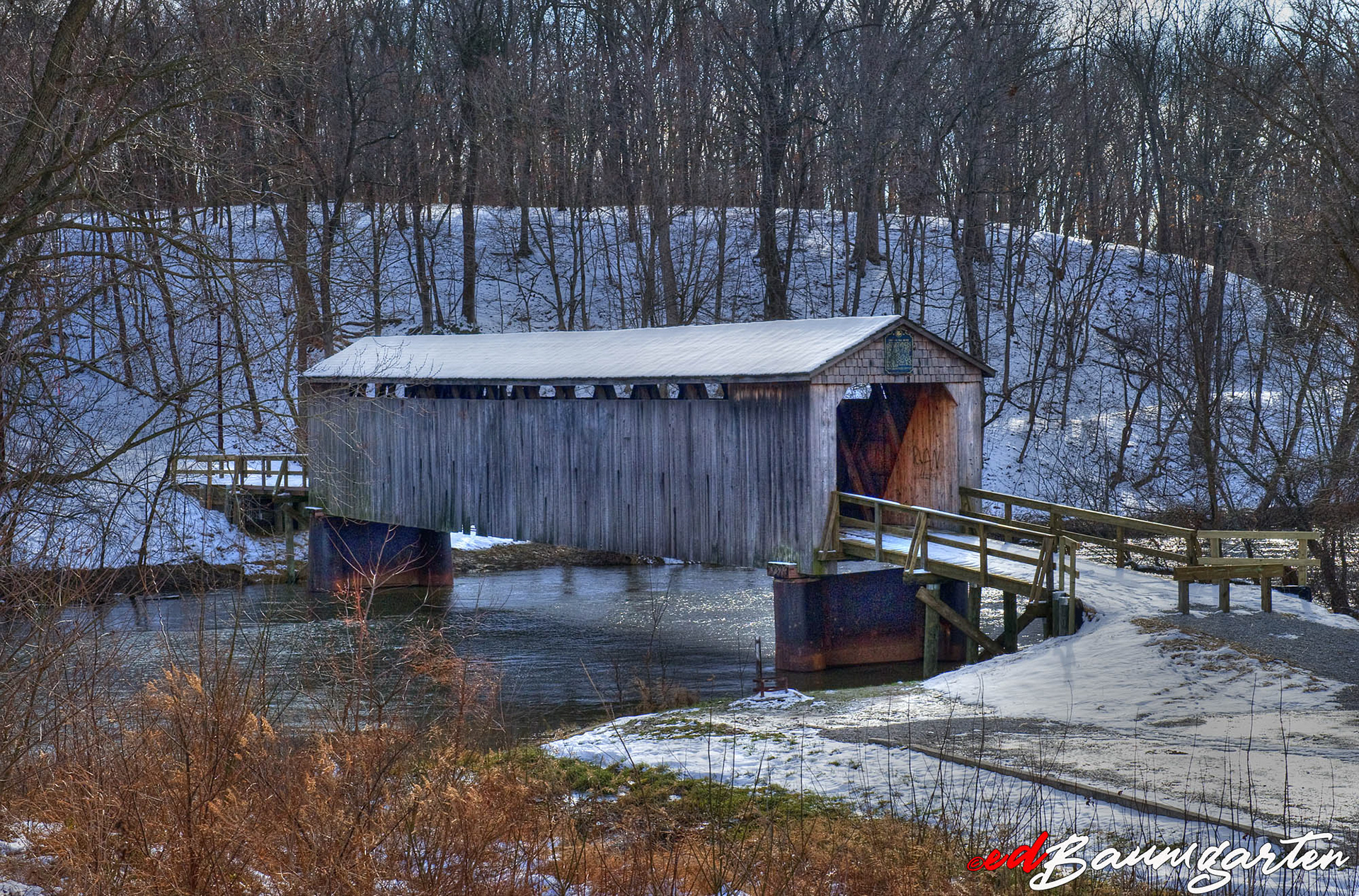
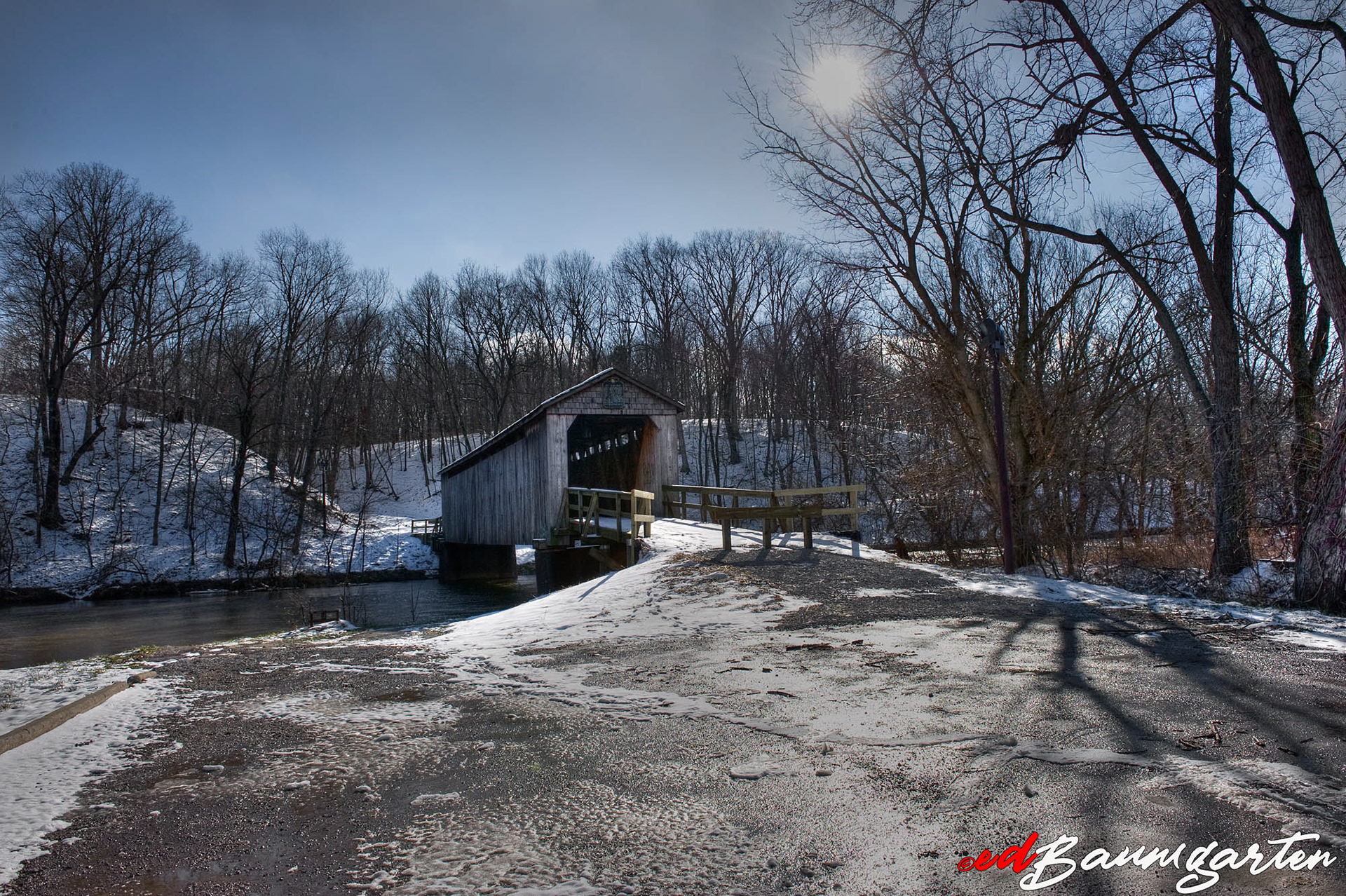
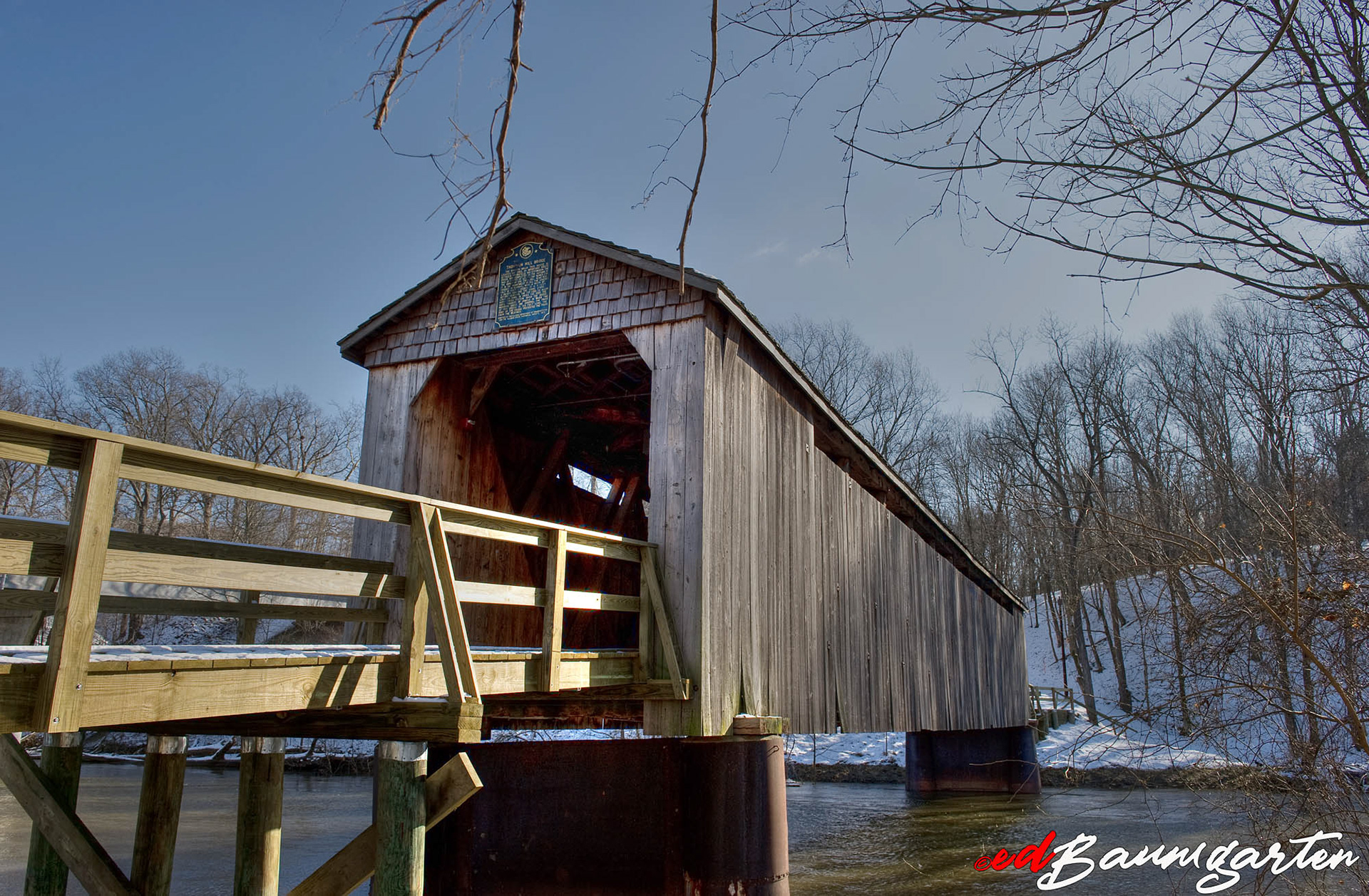
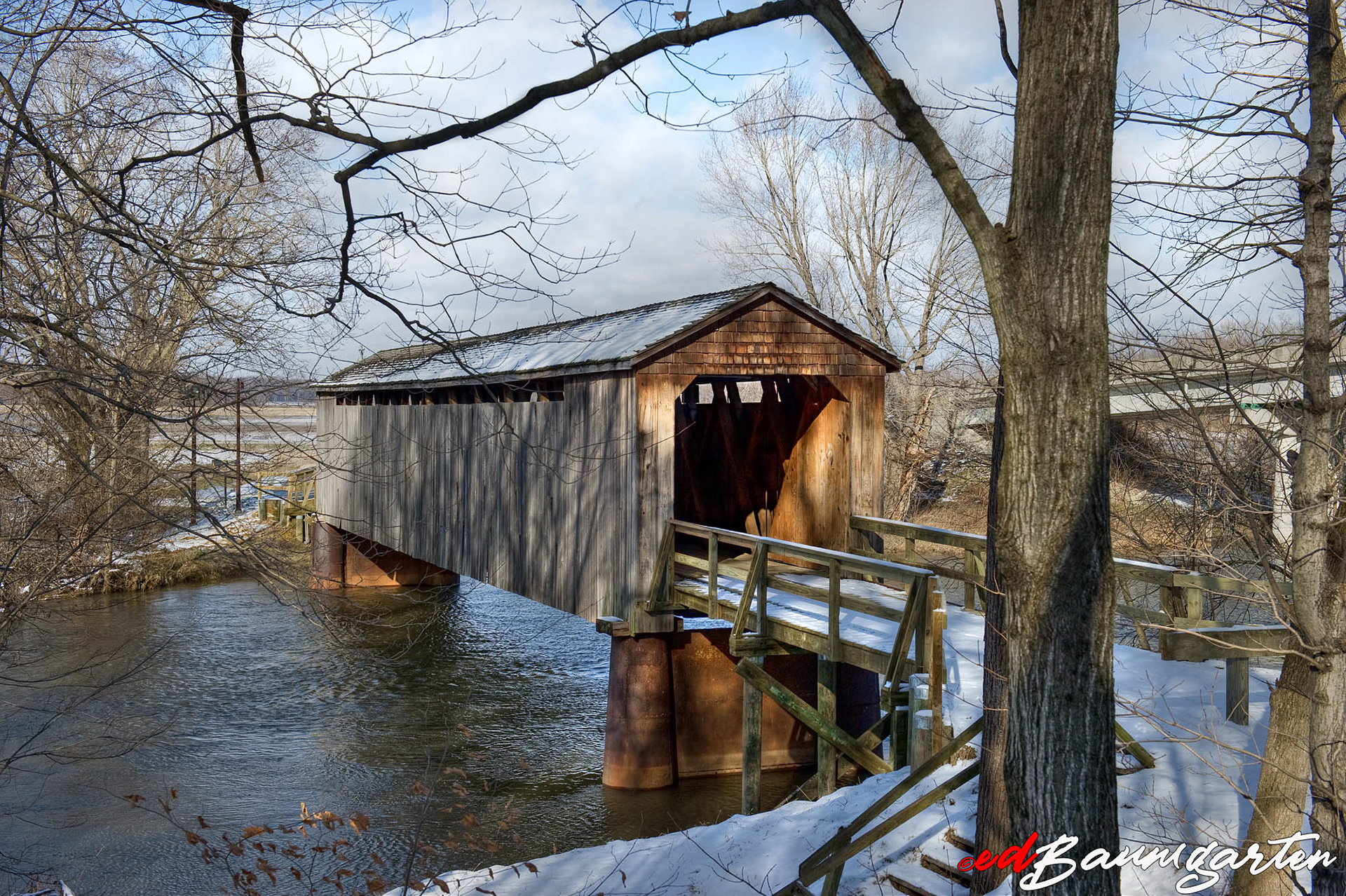
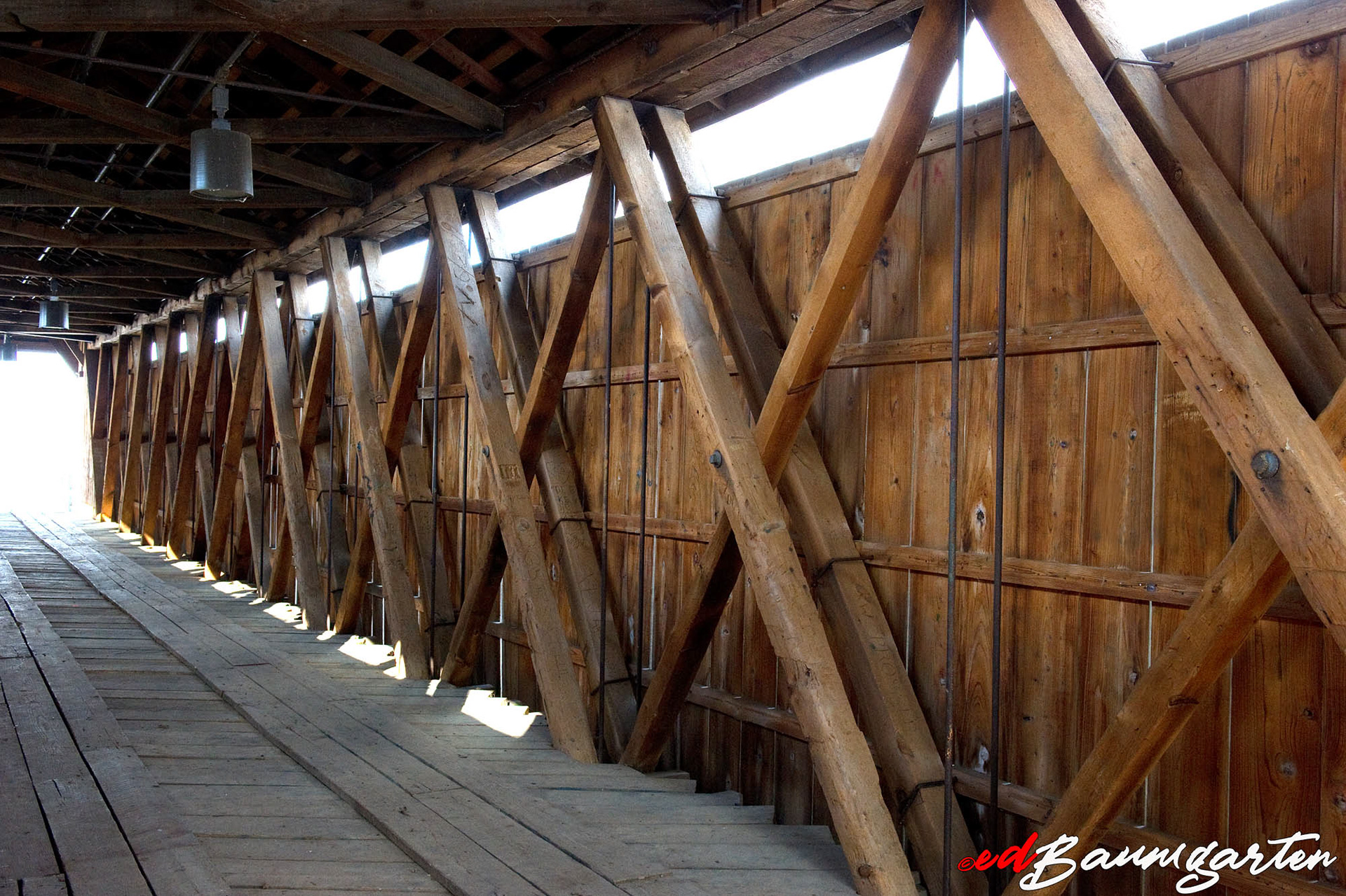
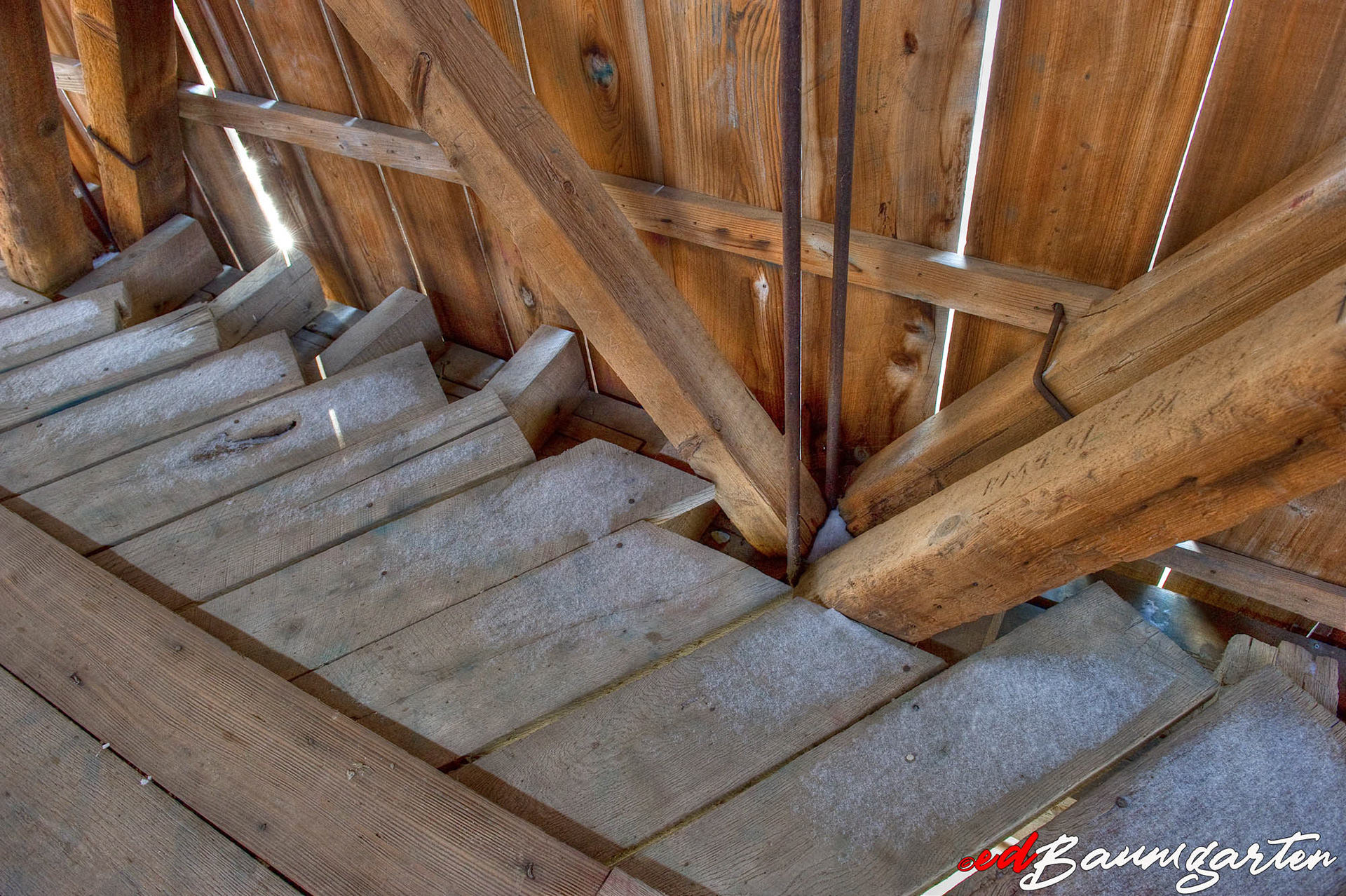
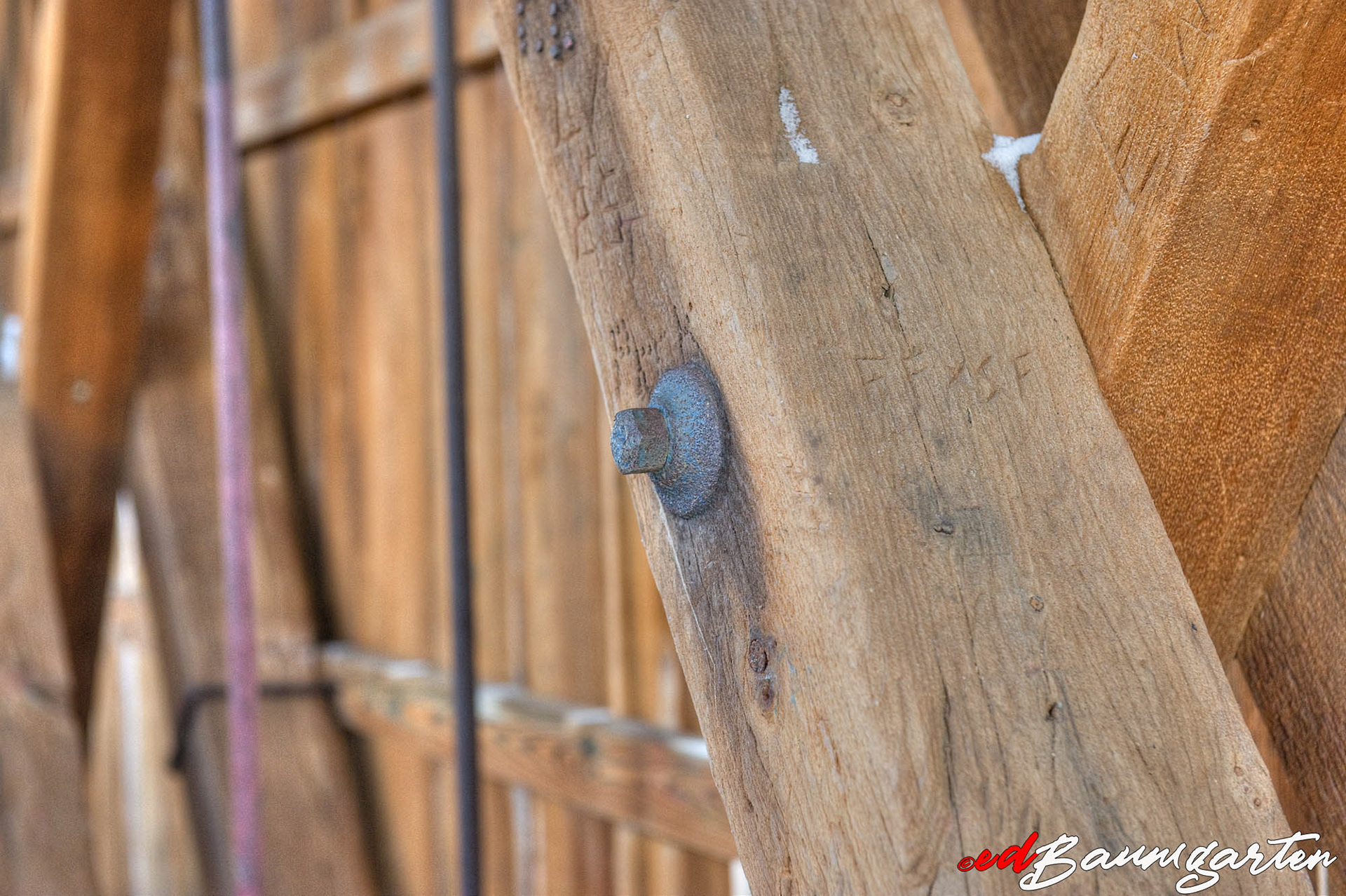
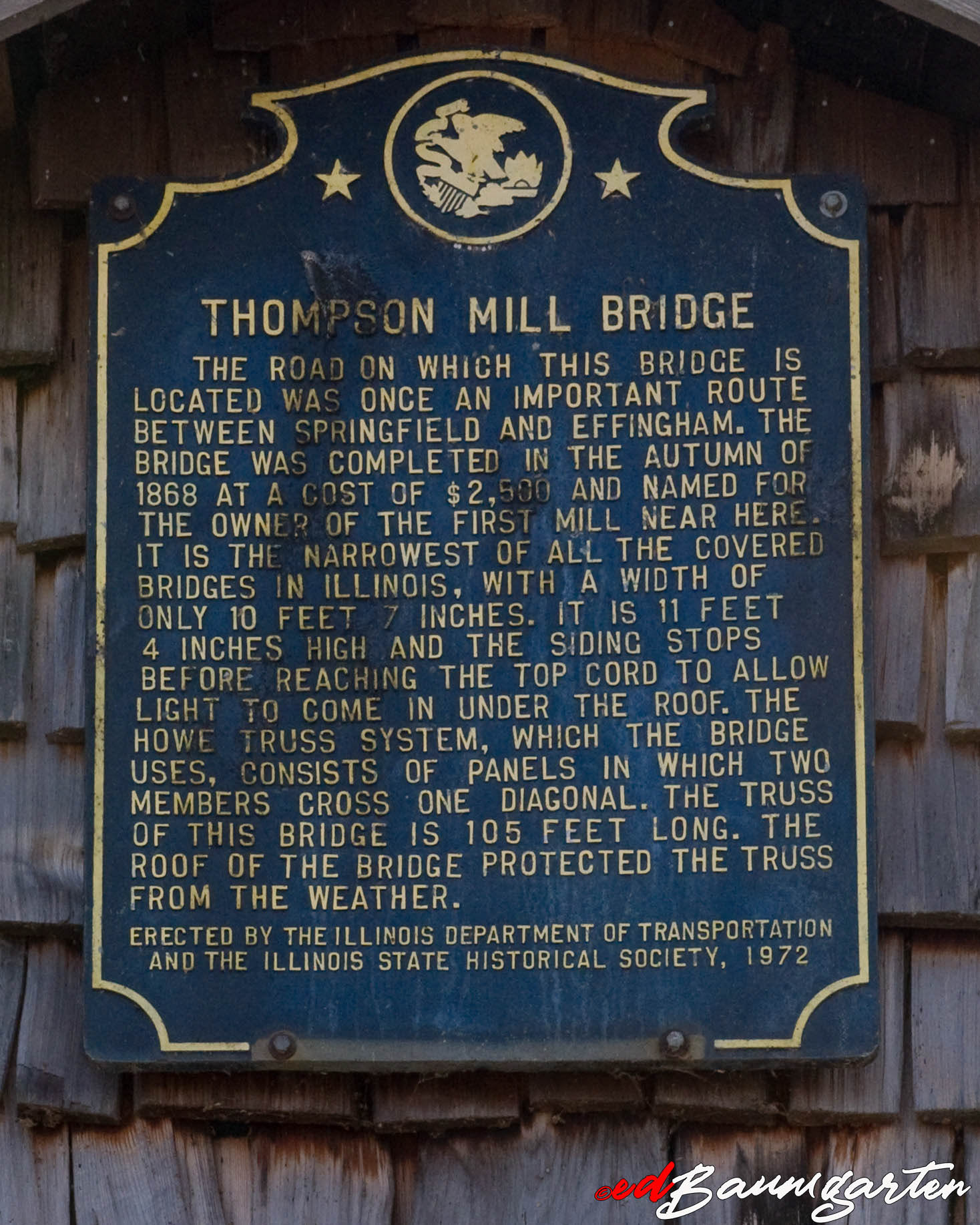

Through the Eye of the Needle: The Story of the Thompson Mill Covered Bridge If you’re willing to leave the highway behind and navigate the winding, scenic back roads of Shelby County, Illinois, you will find a hidden treasure that feels entirely disconnected from the modern world. Just a few miles northeast of the tiny town of Cowden, nestled in a quiet floodplain, the Thompson Mill Covered Bridge stretches gracefully across the Kaskaskia River. While it is one of only five historic 19th-century covered bridges left in the state, it holds a truly unique title: at a mere 10 feet, 7 inches wide, it is officially the narrowest covered bridge in Illinois. Standing inside it feels less like crossing a road and more like looking through the eye of a wooden needle. A Controversial Assembly Line in the Wilderness The bridge’s story begins in 1868, and its construction was anything but local. Because the heavy timber framework required specialized craftsmanship, the bridge was actually prefabricated hundreds of miles away in Michigan. Once the pieces were cut and ready, they were shipped by rail to Shelbyville, Illinois. From there, local workers loaded the massive wooden beams onto horse-drawn wagons, hauling them across rugged prairie terrain to the banks of the Kaskaskia River. When it was completed in the autumn of 1868, the final bill came out to $2,500. While that sounds like a bargain today, it sparked major local controversy at the time. In the post-Civil War era, $2,500 was a small fortune—enough to buy a substantial house and a hundred acres of prime Illinois farmland. Many locals grumbled about the extravagant cost, but the bridge quickly proved its worth. Saws, Grain, and the Road to Springfield The bridge was named after the Thompson Mill, a bustling corn mill and sawmill operated by an early settler that sat right next to the river crossing from 1843 until 1914. Before the bridge was built, getting grain and lumber across the river was a hazardous guessing game depending on the water level. Once the bridge was secure, it didn't just serve local farmers; it became a vital link in a major regional transportation corridor connecting Springfield, Taylorville, and Effingham. Stagecoaches, travelers, and heavily loaded wagons rumbled through its narrow frame daily. Architecturally, the bridge uses a Howe Truss system, a 105-foot span of crisscrossing wooden timbers bound tightly together by vertical iron rods. A Clever Design Trick: Unlike many other covered bridges that are completely enclosed and dark, the builders of the Thompson Mill bridge deliberately stopped the wooden side shingles a few feet below the roof line. This open gap allows a beautiful stream of natural sunlight to pour inside, illuminating the diagonal floorboards and giving travelers a view of the rushing river below. Preserved for the Quiet Moments As the decades rolled on and automobiles replaced horse-drawn carriages, the bridge's exceptionally narrow clearance became a bottleneck. It was eventually retired from vehicular traffic, and a modern concrete bridge was built nearby to handle the load, allowing the old wooden pioneer to rest. On March 13, 1975, its place in history was secured when it was added to the National Register of Historic Places. Unlike some of Illinois’ other covered bridges, which have been painted bright barn red, the Thompson Mill bridge has been left with its natural, weathered wood exterior. It blends seamlessly into the surrounding forest, looking as though it grew directly out of the riverbank. Today, the bridge is open exclusively to pedestrians. A small gravel pull-off nearby allows you to park, stretch your legs, and step inside the historic structure. There is even a small set of stairs leading down the riverbank, giving you the perfect vantage point to appreciate the craftsmanship of 1868. It remains a peaceful, hauntingly beautiful reminder of the days when progress was measured by the clip-clop of hooves on timber. Google maps link (copy and paste) https://maps.app.goo.gl/zPQFqc1VLfAfF5W58